The Science of Invisible Light: Engineering Anti-Glare Commercial LED Downlights
The most comfortable luminaire is often the one occupants never consciously notice. They see the merchandise, artwork, workspace and materials — not a collection of bright points in the ceiling.
Modern commercial architecture has moved beyond specifying lighting by wattage and horizontal illuminance alone. An office may reach its target lux and still feel tiring when high-luminance LED sources remain visible from normal viewing directions. A boutique may be bright yet fail to reveal the color and texture of its products. This white paper explains the engineering logic behind anti-glare commercial LED downlights: how Unified Glare Rating (UGR) should be interpreted, why cut-off geometry matters, and how deep-recessed optical chambers, reflector finish, beam angle, CRI, and thermal stability work together.
1. Invisible Light Is Controlled Light
Invisible Light does not mean the absence of illumination. It describes a condition in which the visual effect is prominent while the luminaire becomes secondary. The observer perceives modeled surfaces, accurate color and a coherent hierarchy without repeated exposure to bright LED chips.
— Synno Lighting Engineering Philosophy
2. Understanding UGR Without Oversimplifying It
Unified Glare Rating (UGR) is widely used to evaluate discomfort glare in indoor lighting installations. It is often presented as if it were a fixed label attached to a product. That interpretation is incomplete. UGR depends on the interaction between the luminaires, the room and the observer.
UGR is a system-level result — four interacting variables:
Targets such as UGR <19 for offices, UGR <13 for museums, and UGR <10 for luxury hospitality should be treated as project objectives — not universal product claims. Final requirements depend on applicable standards, room geometry, and the lighting layout. Always verify with DIALux evo, AGi32, or Relux simulation.
3. Engineering the Cut-off Angle
The cut-off angle describes the shielding geometry that determines when the bright source becomes hidden from view. In a deep-recessed downlight, the LED sits above the ceiling aperture inside an optical chamber. As shielding increases, the source remains concealed across a wider range of normal viewing positions.

Figure 1: Engineering comparison of shallow (20°), balanced (30°), and deep (45°) shielding geometries.
Deep-Recessed COB Positioning
Moving a COB deeper into the housing is an effective shielding strategy, but it introduces constraints. A smaller opening and longer optical chamber leave less area for a reflector, increase thermal density and demand tighter mechanical alignment. Synno's premium downlights recess the COB module significantly — often over 50mm for museum-grade luminaires. The optical designer must balance source concealment with beam efficiency, center intensity and edge uniformity. A professional solution addresses the entire path — from COB and MCPCB to housing and ambient air.
4. Reflectors, Lenses and Beam Control
LED packages typically emit over a wide Lambertian distribution (~120°). Secondary optics convert that raw emission into a useful beam. Depending on the target application, a commercial downlight may use a precision reflector, a TIR lens, an anti-glare cup or a hybrid reflector-lens system.
Black Reflector vs. Matte Silver Reflector
Black Specular Reflectors dramatically reduce the apparent brightness of the aperture, creating a "quiet" ceiling. They are particularly appropriate where visual comfort and architectural integration carry more weight than maximum luminaire efficacy — luxury retail, galleries, hotels, and executive interiors. Matte Silver Reflectors prioritize optical efficiency and balanced distribution, suitable for offices, education, healthcare, and public commercial areas where uniformity is paramount.
| Optical Decision | Primary Objective | Typical Trade-off | Best For |
|---|---|---|---|
| Black reflector | Low apparent aperture brightness | Potential reduction in optical efficiency | Luxury retail, hotels, galleries |
| Matte silver reflector | Efficient, balanced distribution | Brighter visible aperture | Offices, education, public areas |
| TIR lens | Compact, repeatable beam shaping | Requires precise alignment | Small-aperture & accent lighting |
| Adjustable module | Direct light to changing targets | More complex mechanics | Retail, exhibitions, feature walls |
5. Small Aperture, High Optical Discipline
Architects increasingly prefer ceilings with fewer and smaller visual interruptions. A small-aperture downlight supports that objective, but reducing the opening is not a cosmetic exercise — it concentrates the optical and thermal challenge into a compact volume. Successful miniature downlights combine a carefully matched COB or SMD source, precise secondary optics, controlled shielding, stable color rendering and a heat path sized for continuous operation.
"A smaller aperture creates more design possibilities" — when optical control, thermal management and installation geometry are developed together.
6. Application Scenarios, CRI and Beam Selection
Visual comfort alone is not enough. Commercial lighting must communicate texture, color, depth and hierarchy. The correct design combines shielding with suitable CRI, correlated color temperature (CCT), beam angle, illuminance, and spatial contrast.

Figure 2: Professional anti-glare downlight applications across four core commercial environments.
High-End Retail
Retail lighting creates desire. Premium apparel, leather, cosmetics, jewelry and furniture benefit from CRI ≥ 90, while color-critical luxury displays justify CRI ≥ 95 with strong saturated-red (R9) rendering. Narrow or medium beams establish focal points; wider beams provide circulation and ambient support.
Museums & Galleries
Exhibition lighting should reveal artwork without competing with it. Typical project specifications include UGR < 10, CRI > 95, and excellent color consistency (≤ 3 SDCM). Deep-recessed anti-glare optics are particularly valuable because they effectively hide the LED source from the visitor's field of view.
Modern Workspaces
Offices require sustained comfort as occupants alternate between screens, documents and faces. UGR < 19 is the benchmark. Broad ambient distributions support uniformity, while medium-beam downlights provide vertical illumination for collaboration zones.
Hospitality
Hotels favor warm CCT (2700K–3000K), compact apertures and deeply shielded sources. The objective is a calm ceiling that directs attention to materials, furnishings and spatial transitions.
| Beam Angle | Typical Visual Role | Example Applications |
|---|---|---|
| 15° | High-contrast focal emphasis | Jewelry, sculpture, tall displays |
| 24° | Focused accent with useful coverage | Boutique shelving, art, feature walls |
| 36° | Balanced commercial highlighting | Product islands, counters, hotel details |
| 60° | Broad ambient distribution | Circulation, waiting areas, open floors |
Note: This table is a design starting point. Mounting height, spacing, target size, and surface reflectance can change the appropriate selection.
7. Selected Synno Product Platform
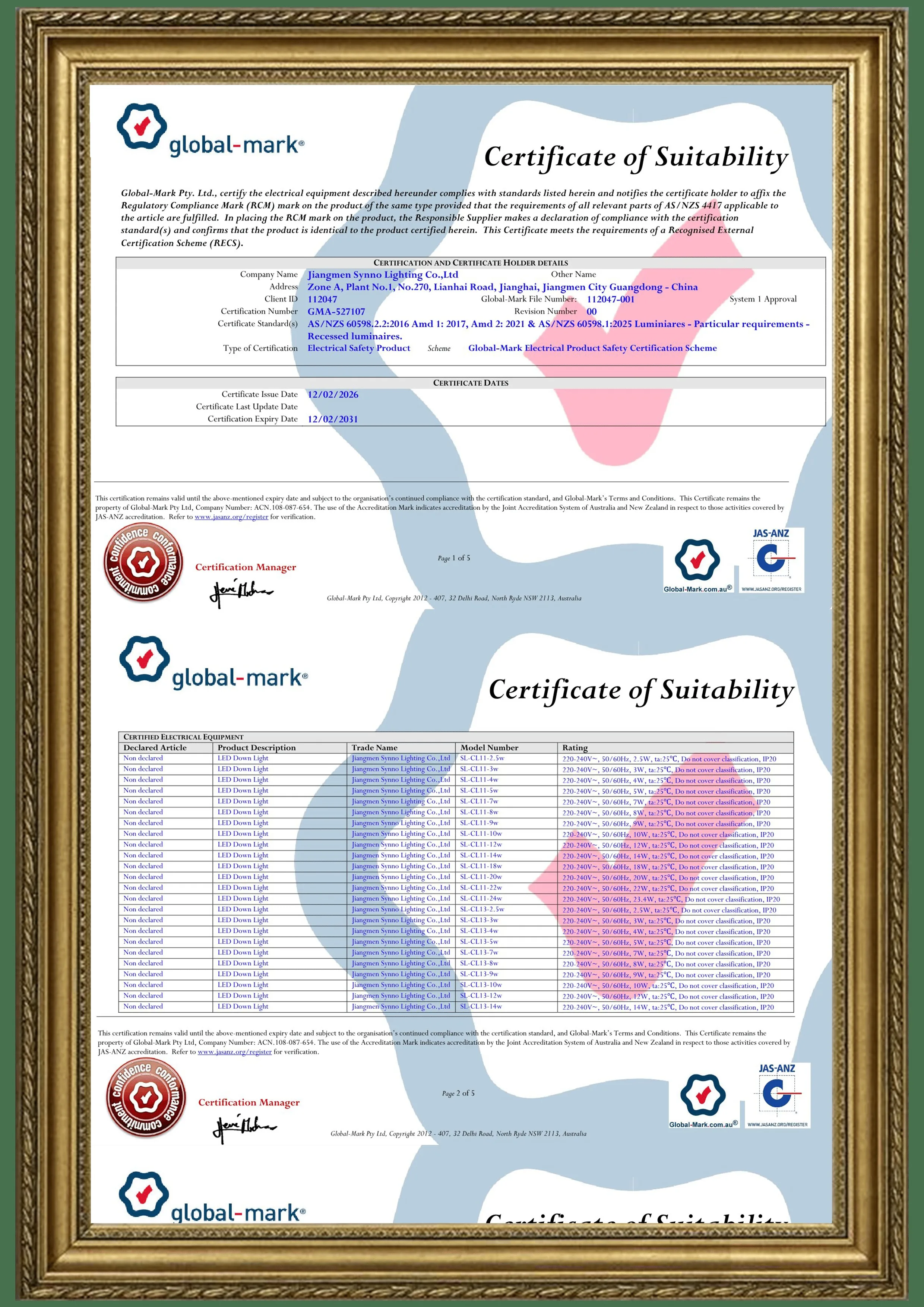
The following products from Synno's 2026 private-product platform illustrate how the principles in this paper translate into different form factors. Confirm final photometric, dimming and certification data for the exact configuration before specification.
SL-CL11A
Compact recessed form for discreet ceiling integration and low-power detail lighting.
SL-CL13C
A shielded optical chamber designed for visual comfort in premium interior applications.
SL-CL19A
Directional recessed architecture for retail displays, galleries and feature lighting.
SL-CL19B
Multiple visible trim and reflector treatments support varied ceiling aesthetics.
SL-B1S
A compact square format for architectural grids and geometric ceiling concepts.
SL-TL11C
Adjustable surface-mounted spotlight for focused commercial illumination.
Explore Synno's full range: commercial LED downlights and LED track lighting systems.
8. From Optical Concept to Project Verification
Professional anti-glare development connects optical design, thermal engineering, manufacturing control and project simulation. A credible workflow includes reflector or lens optimization, mechanical tolerance review, thermal-path assessment, photometric measurement and application-level calculation.
COB Selection & Thermal Path
Color rendering, chromaticity stability and lumen maintenance depend on operating temperature as well as the LED package. At Synno, the complete path — COB → MCPCB → Die-cast Housing → Ambient Air — is thermally simulated to verify junction temperatures before production approval. This ensures stable luminous flux maintenance (L70 > 50,000 hours) and consistent color across the fixture's service life.
Photometric & Layout Verification
IES or LDT files allow project teams to assess beam spacing, illuminance, uniformity and glare under defined conditions. Claims about low-glare performance should be supported by the exact luminaire configuration and the intended room model. Lighting simulation using DIALux evo or AGi32 is recommended for accurate project verification.
Manufacturing Quality Assurance
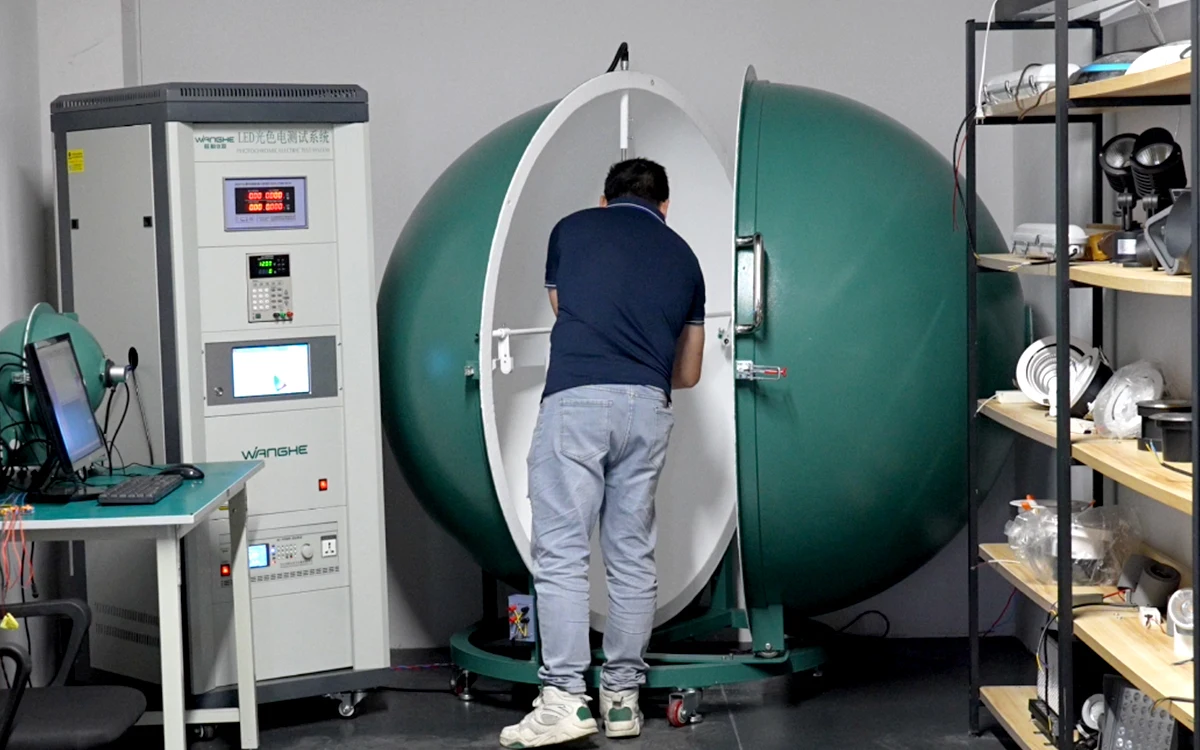
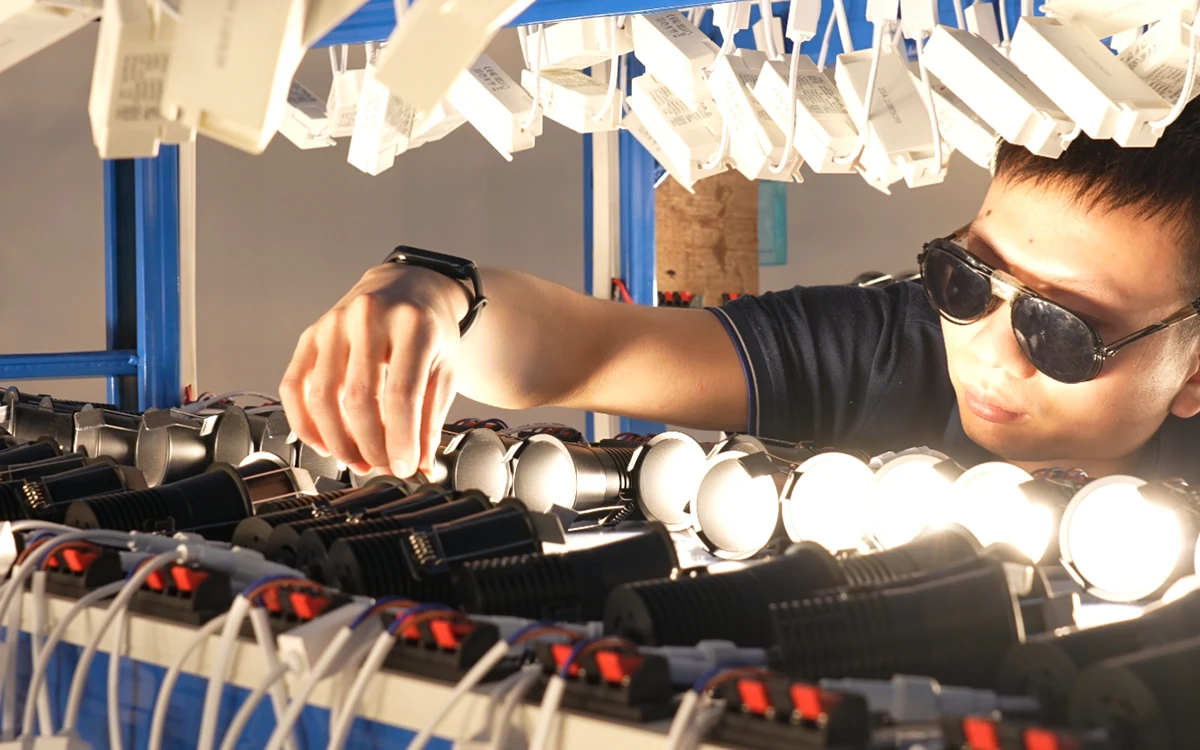
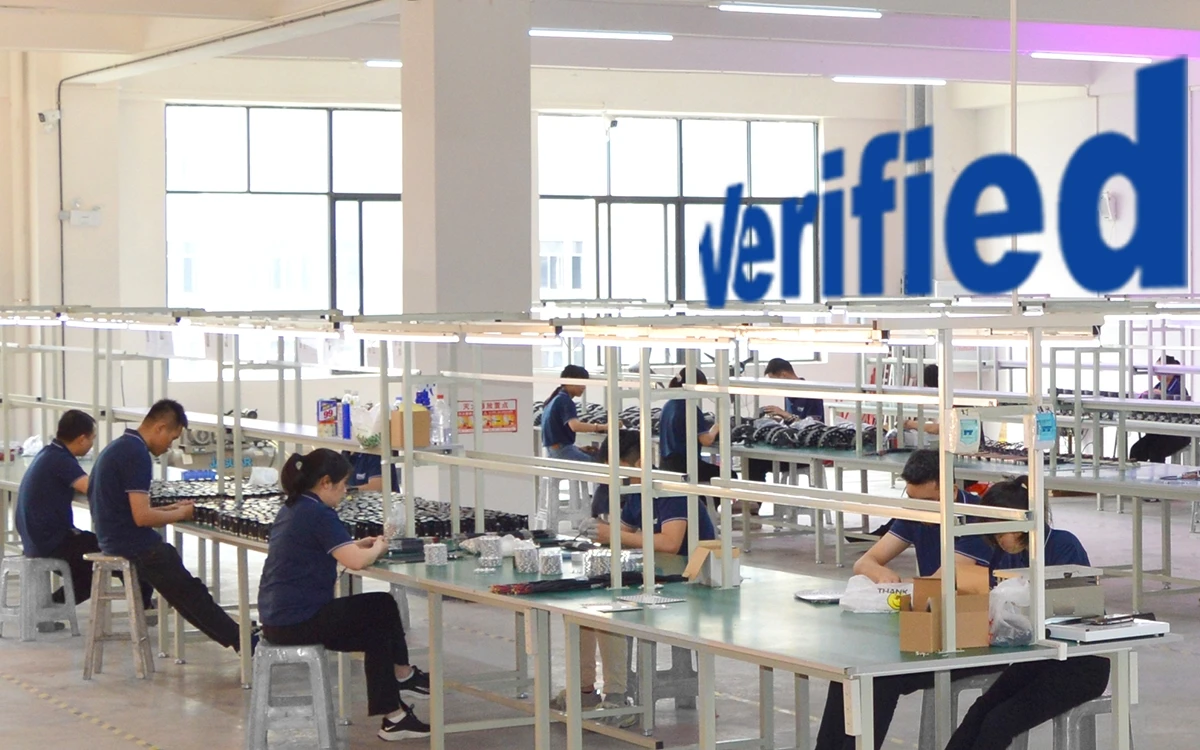
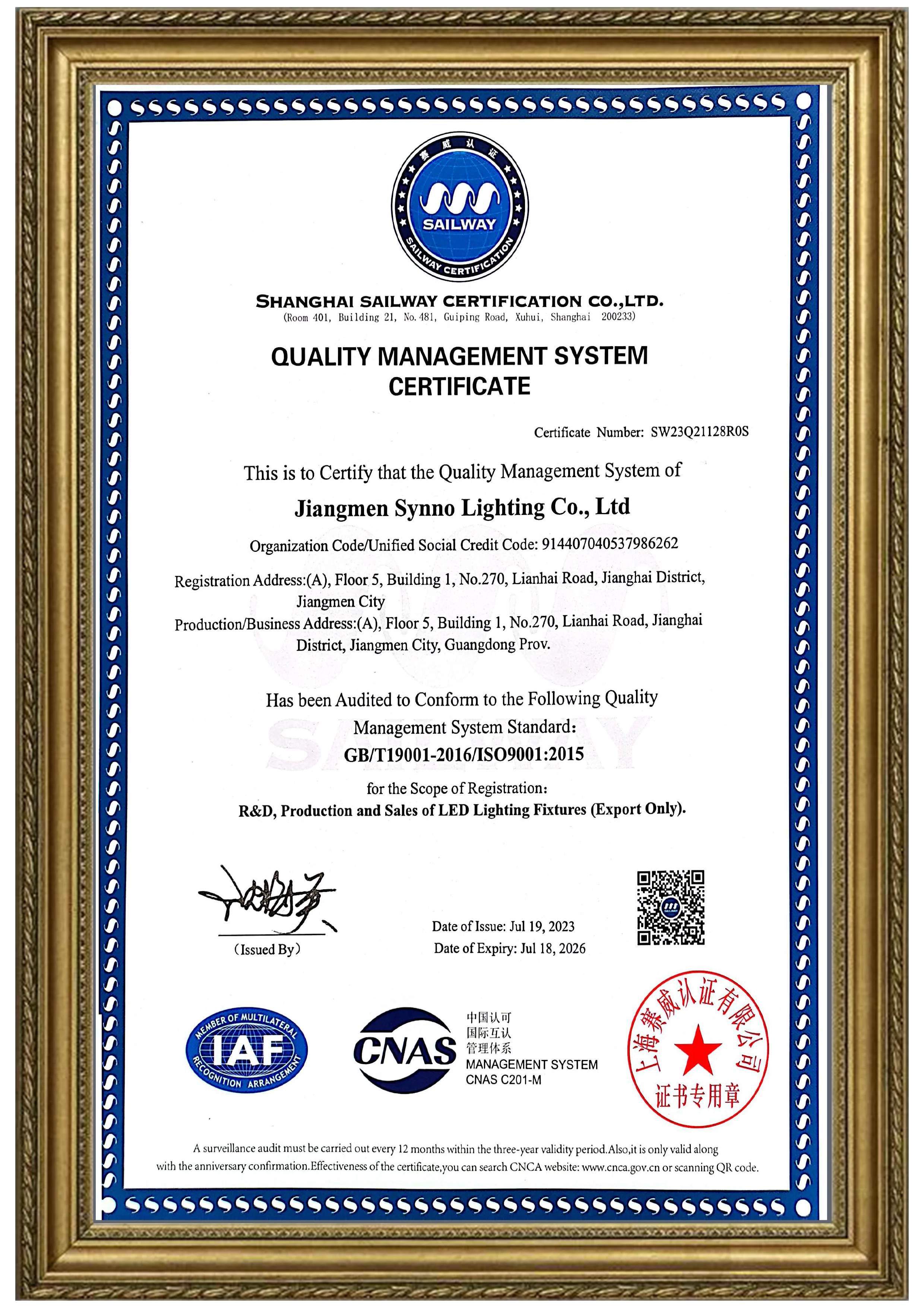
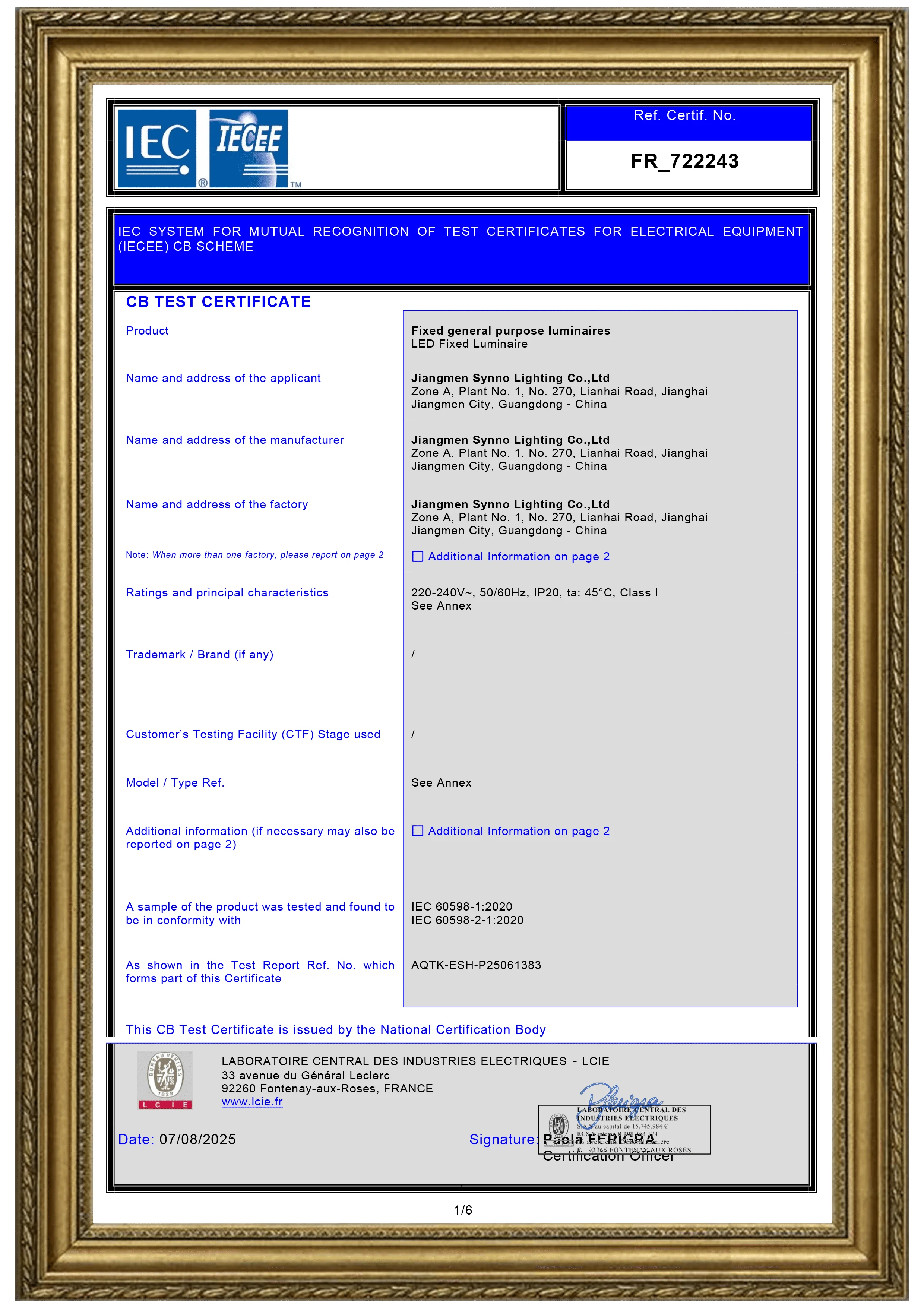
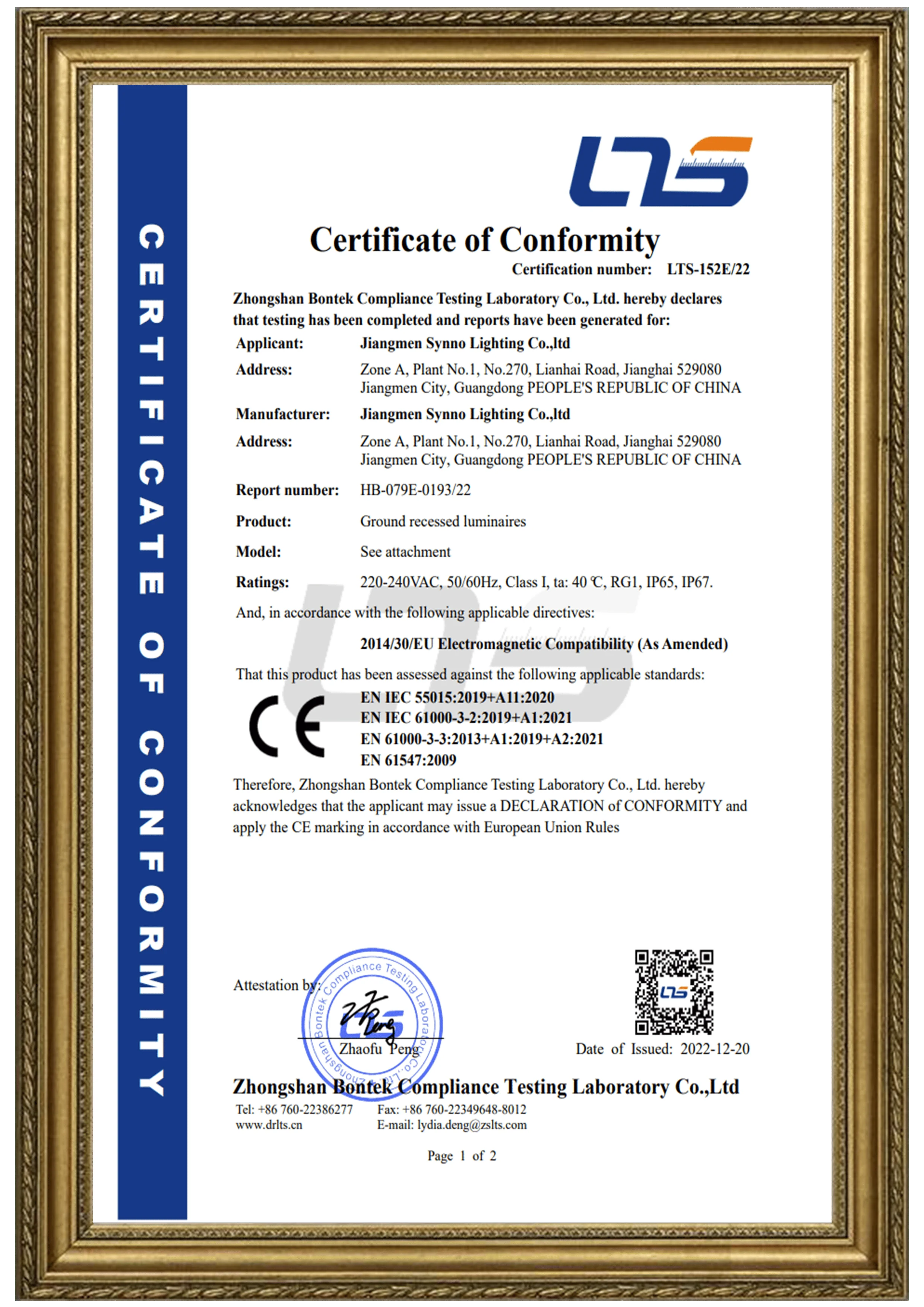
At Synno's Jiangmen facility, every production batch undergoes Continuous Burn-in Testing and Thermal Cycling Tests. We verify that reflectors maintain their alignment even after repeated heating and cooling cycles. CNC housing inspection ensures that every secondary optic sits with absolute concentricity to the COB module, preventing asymmetric beam patterns that can compromise a professional lighting design.
9. Frequently Asked Questions
No. A luminaire's photometric characteristics influence glare, but calculated UGR also depends on room geometry, reflectance, spacing, observer position and viewing direction. Evaluate the proposed layout using suitable photometric data.
Recessing the LED source increases shielding and reduces direct source visibility from normal viewing angles. The final result still depends on aperture luminance, reflector design and installation layout.
Choose black when a dark, quiet aperture and low apparent brightness are priorities (luxury retail, galleries, hotels). Choose matte silver when optical efficiency and broad commercial utility carry more weight (offices, education, healthcare). Test samples under project conditions whenever possible.
CRI 95 is valuable for color-critical retail, artwork and premium materials, but it may involve efficacy or cost trade-offs. CRI 90 can be appropriate for many commercial spaces. Also review R9 (saturated red), chromaticity consistency and spectral requirements.
15° and 24° beams create focused accents; 36° is a versatile commercial option; 60° provides broad coverage. Final selection should reflect mounting height, target size, spacing and desired contrast.
Yes, when the LED source, secondary optics and thermal design are matched correctly. Verify the actual whole-luminaire output and photometric file rather than relying on LED-chip efficacy alone.
Project Support
Designing a retail, hotel, gallery or office lighting project?
Send Synno Lighting your ceiling plan, target illuminance, preferred CCT and control requirements. Our team can recommend suitable downlight configurations and discuss photometric files, dimming options, OEM/ODM development and project-specific optical requirements.
Technical disclaimer: Recommendations in this article are general engineering guidance. Final luminaire selection must be verified against the exact product configuration, photometric data, project conditions, applicable standards and local regulations.