How to Choose Tree Ring Flood Light: A Glow-Up for Your Outdoor Space
Outdoor landscape lighting has evolved from simple illumination into a sophisticated design element that enhances architecture, gardens, and natural scenery. Among the latest innovations in decorative outdoor lighting, the tree ring flood light has become increasingly popular for creating dramatic nighttime effects around trees and landscape features.
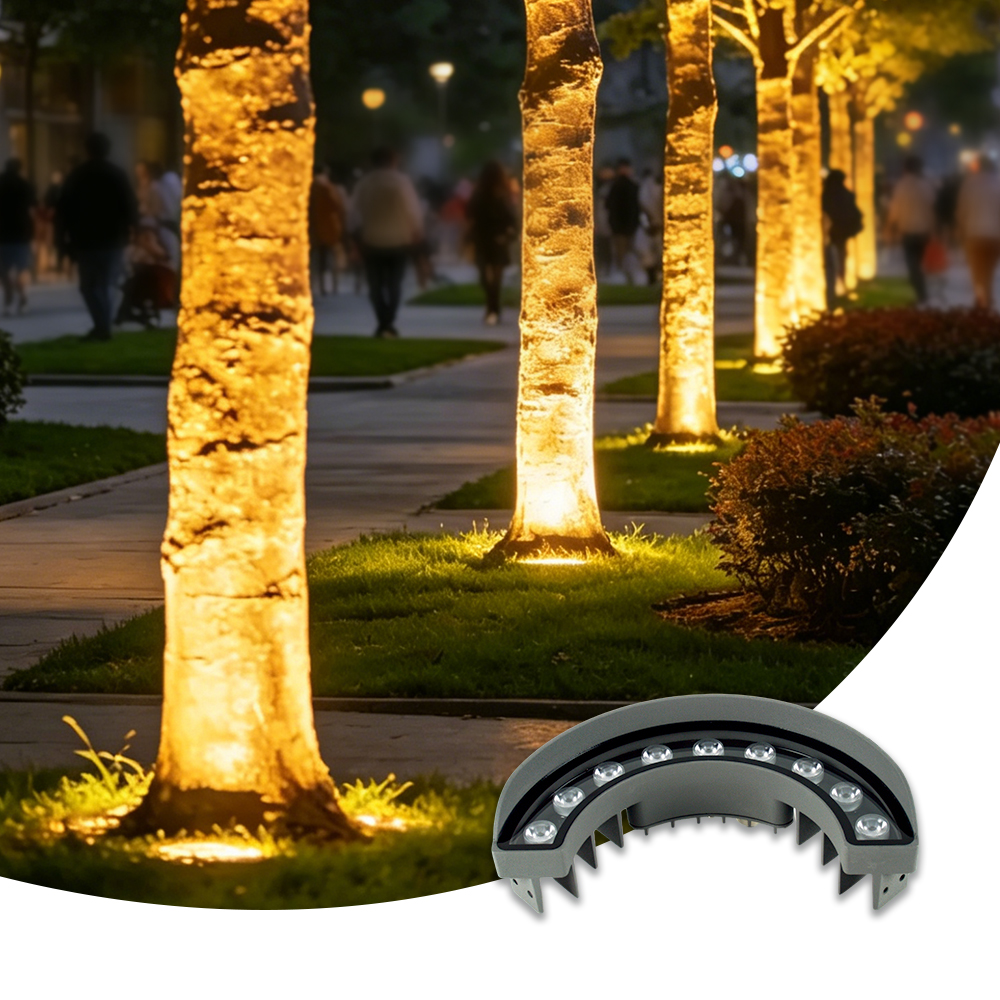
Unlike traditional spike spotlights or standard flood lights, tree ring flood lights provide 360-degree upward illumination around the trunk, producing a balanced and elegant lighting effect that transforms trees into visual focal points after dark.
However, choosing the right tree ring flood light requires more than selecting a fixture that simply fits around a trunk. Factors such as beam angle, lumen output, waterproof performance, installation size, material quality, and lighting effect all play a crucial role.
This guide explains how to choose the right tree ring LED floodlight for your outdoor space with professional insights suitable for landscape designers, contractors, distributors, and property owners.
1. What Is a Tree Ring Flood Light?
A tree ring flood light is a specialized outdoor lighting fixture designed to wrap around the base of a tree trunk. It emits light upward from multiple angles, creating uniform illumination across the trunk, branches, and canopy.
Tree ring lights are commonly used in:
- Luxury residential gardens
- Hotels and resorts
- Parks and public landscapes
- Commercial plazas
- Villa courtyards
- Architectural landscapes
Unlike single-direction spike lights, tree ring lights create:
- More balanced lighting
- Softer shadows
- Stronger visual impact
2. Why Tree Ring Flood Lights Are Popular in Landscape Design
Modern landscape lighting focuses on:
- Layered illumination
- Hidden fixtures
- Architectural aesthetics
- Natural nighttime ambiance
Tree ring flood lights provide:
- Seamless integration into landscapes
- 360° lighting effects
- Reduced glare
- Elegant tree highlighting
They create a premium, high-end outdoor atmosphere.
3. Understand the Different Types of Tree Ring Floodlight
Before selecting a product, understand the main categories.
3.1 Integrated Ring Flood Lights
Features:
- Circular one-piece design
- Uniform lighting distribution
- Clean appearance
Best for:
- Newly planted or medium-sized trees
3.2 Adjustable Split Ring Lights
Features:
- Openable or segmented structure
- Flexible sizing
- Easier installation on existing trees
Best for:
- Mature trees with large trunks
3.3 RGB Tree Ring Lights
Features:
- Color-changing effects
- Smart control compatibility
- Dynamic landscape lighting
Best for:
- Resorts
- Commercial projects
- Entertainment landscapes
4. Choose the Correct Ring Diameter
One of the most important factors is matching the fixture size to the tree trunk.
General Guidelines
| Tree Trunk Diameter | Recommended Ring Size |
|---|---|
| 10–20 cm | Small ring |
| 20–40 cm | Medium ring |
| 40–60 cm | Large ring |
| 60 cm+ | Adjustable split ring |
The ring should:
- Fit comfortably around the trunk
- Leave space for future tree growth
- Avoid excessive pressure on bark
Never install fixtures too tightly around living trees.
5. Select the Right Beam Angle
Beam angle determines how the light spreads upward.
Beam Angle Recommendations
| Beam Angle | Effect | Best Use |
|---|---|---|
| 15°–30° | Narrow spotlight | Tall trees |
| 30°–60° | Medium beam | Most landscape trees |
| 60°–120° | Wide flood | Large canopy trees |
Professional Recommendation:
For most landscape applications:
- 30°–45° beam angle provides the best balance.
6. Determine Appropriate Brightness (Lumens)
Too much brightness can make landscapes look harsh, while insufficient brightness reduces visual impact.
Recommended Lumen Output
| Tree Size | Recommended Lumens |
|---|---|
| Small tree | 300–600 lm |
| Medium tree | 600–1200 lm |
| Large tree | 1200–3000 lm |
Tree lighting should create atmosphere rather than overpower the environment.
7. Choose the Right Color Temperature (CCT)
Color temperature greatly affects outdoor ambiance.
Recommended CCT for Tree Lighting
| CCT | Effect |
|---|---|
| 2700K | Warm, luxurious |
| 3000K | Natural landscape lighting |
| 4000K | Neutral architectural lighting |
| 5000K+ | Security-focused brightness |
Most Popular Choice:
- 3000K warm white
It enhances:
- Bark texture
- Leaf color
- Natural appearance
8. Waterproof Rating Is Critical
Outdoor tree lighting faces:
- Rain
- Irrigation water
- Soil moisture
- Dust
- Humidity
Choose fixtures with:
- IP65 minimum
- IP67/IP68 preferred
Higher IP ratings ensure long-term reliability.
9. Material Quality Matters
Premium outdoor fixtures should use:
- Die-cast aluminum housing
- Stainless steel hardware
- UV-resistant coating
Avoid low-quality plastic fixtures for permanent outdoor use.
10. Focus on Heat Dissipation
LED performance depends heavily on thermal management.
Good tree ring flood lights include:
- Integrated heat sinks
- Aluminum body structure
- Ventilated design
Poor heat dissipation shortens lifespan significantly.
11. Consider Glare Control
Poorly designed flood lights create uncomfortable glare.
Look for:
- Recessed LED sources
- Anti-glare optical design
- Shielded beam control
The light should highlight the tree—not blind viewers.
12. Low Voltage vs High Voltage Systems
Low Voltage (12V / 24V)
Advantages:
- Safer for outdoor environments
- Easier installation
- Ideal for landscape projects
Most residential tree ring systems use low voltage.
High Voltage (110–240V)
Suitable for:
- Large commercial projects
- Public landscaping
Requires professional installation.
13. Smart Control Features
Modern tree ring floodlights may support:
- RGB color control
- DMX systems
- DALI dimming
- App-based control
- Timer settings
Smart features are especially useful for:
- Hotels
- Resorts
- Event landscapes
14. Installation Considerations
Important Tips:
- Avoid damaging tree roots
- Leave room for trunk growth
- Ensure proper drainage
- Protect underground cables with conduit
Poor installation can damage both the fixture and the tree.
15. Best Placement Techniques
For best effect:
- Position light at trunk base
- Ensure symmetrical illumination
- Avoid uneven light distribution
Some projects combine:
- Tree ring lights
- Spike spotlights
- Pathway lighting
to create layered lighting effects.
16. Energy Efficiency Benefits
LED tree ring flood lights provide:
- Low energy consumption
- Long lifespan (30,000–50,000 hours)
- Reduced maintenance cost
Compared to traditional halogen systems, energy savings can exceed 70%.
17. Common Mistakes to Avoid
❌ Choosing oversized fixtures
❌ Ignoring future tree growth
❌ Over-lighting trees
❌ Using low IP-rated fixtures
❌ Installing without drainage planning
18. Design Example
Luxury Garden Landscape
Configuration:
- 3000K warm white
- 36° beam angle
- 900 lumens per tree
- IP67 aluminum housing
- Low-voltage 24V system
Result:
- Elegant nighttime atmosphere
- Balanced tree illumination
- Reduced glare
19. Which Trees Work Best with Ring Flood Lights?
Ideal for:
- Palm trees
- Maple trees
- Olive trees
- Decorative ornamental trees
- Feature landscape trees
Less suitable for:
- Extremely dense low shrubs
- Very irregular multi-trunk growth
20. Future Trends in Tree Landscape Lighting
Emerging trends include:
- Ultra-slim ring designs
- Smart RGBW systems
- Solar-assisted landscape lighting
- Dynamic programmable lighting scenes
Landscape lighting is becoming increasingly integrated with smart outdoor living.
Conclusion
Choosing the right tree ring flood light requires balancing:
- Lighting effect
- Fixture size
- Beam angle
- Brightness
- Durability
- Installation method
When properly selected and installed, LED tree ring flood lights can dramatically enhance outdoor landscapes by creating:
- Elegant nighttime ambiance
- Architectural depth
- Enhanced visual hierarchy
- Premium landscape aesthetics
For modern outdoor lighting design, tree ring flood lights offer a unique and highly professional solution that combines functionality with artistic visual impact.