
LED Garden Spike Light Ideas for Pathways, Lawns, and Flowerbeds
Outdoor lighting is no longer just about visibility. In modern landscape design, lighting has become an essential element for creating atmosphere, highlighting architectural details, improving safety, and extending the usability of outdoor spaces after dark.
Among the most versatile and cost-effective landscape lighting solutions, LED garden spike lights stand out for their flexibility, easy installation, and ability to create dramatic lighting effects in pathways, lawns, and flowerbeds.
Also known as:
- LED landscape spike lights
- Garden spot lights
- Outdoor spike spotlights
- Ground spike lights
- Landscape uplights
these fixtures are widely used in residential gardens, hotels, parks, villas, resorts, and commercial landscapes.
This guide explores creative and professional lighting ideas using LED garden spike lights for pathways, lawns, and flowerbeds while also explaining the technical considerations behind successful landscape lighting design.
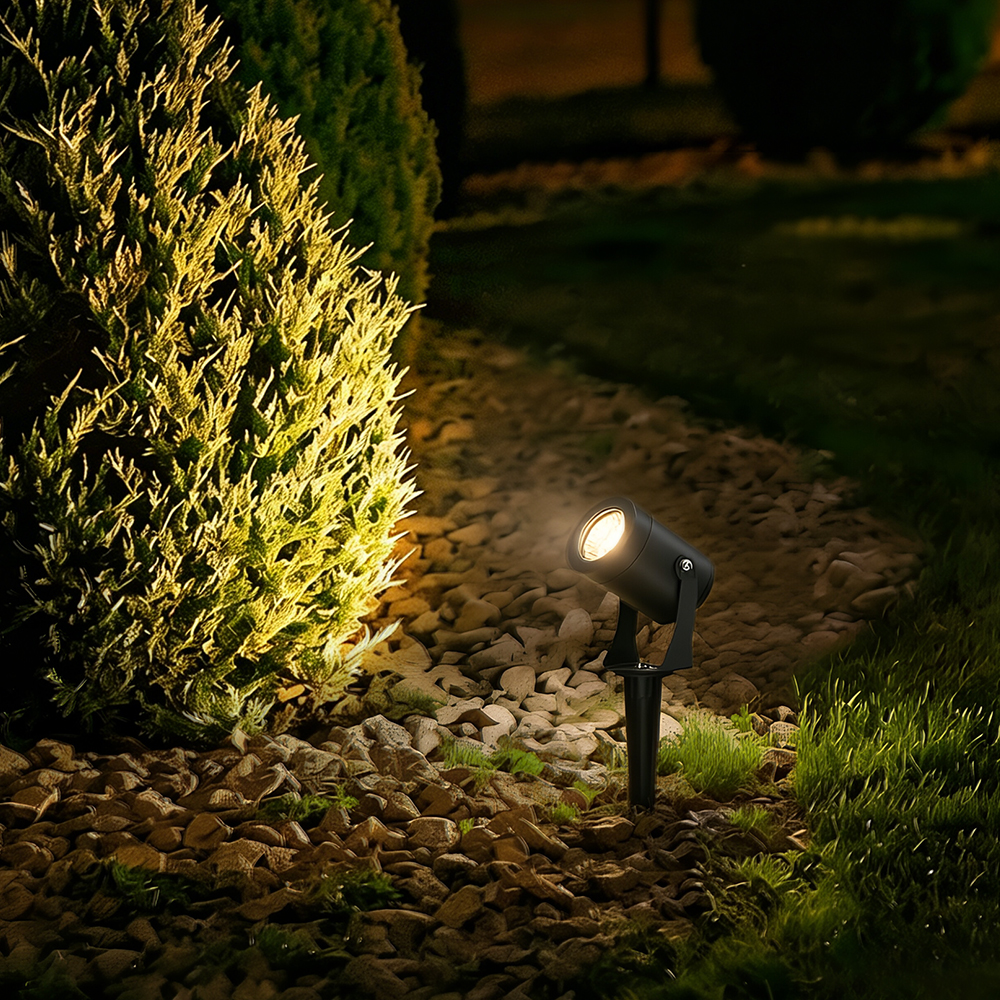
1. What Are LED Garden Spike Lights?
LED garden spike lights are outdoor luminaires mounted on a ground spike or stake that can be inserted directly into:
- Soil
- Grass
- Gravel
- Planting beds
Their main advantage is flexibility. Unlike recessed inground lights, spike lights can easily be repositioned as landscapes evolve.
Most LED spike lights feature:
- Adjustable lighting heads
- Low-voltage operation (12V/24V)
- Waterproof construction
- Directional beam control
They are commonly used for:
- Tree uplighting
- Pathway illumination
- Accent lighting
- Flowerbed highlighting
- Architectural landscape effects
2. Why LED Spike Lights Are Popular in Landscape Lighting
LED garden spike lights have become increasingly popular because they combine:
- Easy installation
- Energy efficiency
- Minimal visual intrusion
- Flexible beam direction
- Long lifespan
Compared with traditional halogen garden lighting, LED spike lights consume significantly less energy while providing better durability and lower maintenance.
Landscape designers particularly favor spike lights because they can be repositioned as plants grow or garden layouts change.
3. Pathway Lighting Ideas Using LED Spike Lights
Pathway lighting is one of the most important applications for outdoor spike lights because it improves:
- Safety
- Navigation
- Visual structure
- Nighttime ambiance
4. Soft Edge Lighting for Garden Paths
One of the most elegant techniques is placing spike lights along the edges of pathways.
Design Tips:
- Install lights in staggered positions
- Avoid perfectly symmetrical layouts
- Use warm white lighting (2700K–3000K)
This creates:
- A softer visual flow
- Reduced glare
- More natural nighttime aesthetics
Experts recommend subtle path lighting to maintain visual harmony without overpowering the landscape.
5. Narrow Beam Lighting for Walkway Definition
For modern pathways:
- Use narrow beam spike lights (15°–30°)
- Aim beams downward across the walking surface
This technique:
- Clearly defines the path
- Prevents light spill
- Improves visual guidance
6. Layered Pathway Lighting
Professional landscape lighting rarely relies on a single fixture type.
Combine:
- LED spike lights
- Bollard lights
- Inground lights
- Hardscape lighting
to create layered illumination.
This improves:
- Depth perception
- Lighting balance
- Visual sophistication
7. Lawn Lighting Ideas with LED Spike Lights
Large lawns can feel visually empty at night without proper lighting.
Spike lights help create:
- Spatial depth
- Visual structure
- Feature highlighting
8. Tree Uplighting on Lawns
One of the most effective uses of spike lights is tree uplighting.
Recommended Technique:
- Position light near trunk base
- Aim upward into canopy
- Use narrow or medium beam angles
Landscape experts recommend narrow beams for tall trees and wider beams for canopy illumination.
9. Moonlighting Effects for Natural Lawn Ambiance
Moonlighting simulates natural moonlight by casting soft light downward from elevated positions.
You can combine:
- Elevated spike lights
- Soft beam distribution
- Warm white CCT
to create a natural nighttime atmosphere across lawns.
This technique works especially well for:
- Villas
- Resort landscapes
- Luxury gardens
10. Creating Visual Depth Across Large Lawns
Instead of evenly flooding the entire lawn with light:
- Highlight selected focal points
- Illuminate trees or sculptures
- Leave some shadow areas intentionally
This creates:
- Better contrast
- Greater visual drama
- More luxurious appearance
11. Flowerbed Lighting Ideas Using LED Spike Lights
Flowerbeds become visually flat at night without lighting.
Spike lights can dramatically enhance:
- Plant textures
- Flower colors
- Landscape layering
12. Backlighting Flowers for Dramatic Effects
Instead of placing lights directly in front:
- Position lights behind plants
- Aim light across foliage
This technique creates:
- Silhouettes
- Soft glow effects
- Enhanced depth
Landscape designers recommend hiding fixtures within planting to create a more mysterious glow.
13. Highlighting Ornamental Grasses and Shrubs
Warm white spike lights work beautifully with:
- Ornamental grasses
- Decorative shrubs
- Low hedges
Wide beam angles create softer illumination without harsh shadows.
14. Color Temperature Strategy for Flowerbeds
Different plants react differently under lighting.
Recommended CCT:
| Landscape Element | Recommended CCT |
|---|---|
| Flowers | 2700K–3000K |
| Green shrubs | 3000K–4000K |
| Decorative modern gardens | 4000K |
Warm white is generally preferred because it creates a relaxing outdoor atmosphere.
15. Beam Angle Selection for Different Landscape Areas
Beam angle significantly affects lighting quality.
| Beam Angle | Best Use |
|---|---|
| 15°–25° | Trees and sculptures |
| 30°–45° | Pathways and shrubs |
| 60°+ | Flowerbeds and lawn wash lighting |
Proper beam selection prevents:
- Excessive glare
- Uneven brightness
- Wasted light
16. Low-Glare Lighting Techniques
Glare is one of the biggest mistakes in landscape lighting.
To reduce glare:
- Hide fixtures behind plants
- Aim beams carefully
- Use recessed LED optics
- Avoid direct eye-level exposure
Professional lighting should illuminate landscapes—not the light source itself.
17. Smart Placement Ideas for Small Gardens
In compact landscapes:
- Use fewer fixtures
- Focus on key visual points
- Avoid over-lighting
Small gardens benefit more from selective accent lighting than excessive brightness.
18. Lighting Garden Borders and Edges
Spike lights can also define:
- Lawn boundaries
- Landscape edging
- Curved garden lines
This creates:
- Better nighttime orientation
- Stronger landscape structure
- Elegant visual outlines
Modern recessed and low-profile lighting techniques are increasingly used for landscape edging effects.
19. Choosing the Right Brightness
Brightness should match the application.
Recommended Lumen Levels
| Application | Lumens |
|---|---|
| Flowerbeds | 100–300 lm |
| Pathways | 200–400 lm |
| Tree uplighting | 500–1000 lm |
Lighting experts recommend focusing on lumens instead of wattage when designing outdoor LED systems.
20. Waterproof and Durability Requirements
Outdoor spike lights must withstand:
- Rain
- Soil moisture
- Irrigation systems
- Temperature fluctuations
Recommended:
- IP65 minimum
- IP67 preferred for demanding environments
Durable materials include:
- Die-cast aluminum
- Stainless steel
- Tempered glass
21. Adjustable Spike Lights vs Fixed Lights
Adjustable spike lights offer:
- Flexible beam direction
- Easier repositioning
- Adaptability as plants grow
This flexibility is one reason they are favored over fixed inground lights in many landscapes.
22. Low Voltage Systems for Garden Safety
Most professional garden lighting systems use:
- 12V
- 24V low-voltage power systems
Benefits:
- Safer outdoor installation
- Easier maintenance
- Lower electrical risk
23. Common Landscape Lighting Mistakes to Avoid
❌ Over-lighting pathways
❌ Using cool white lighting everywhere
❌ Poor beam angle selection
❌ Ignoring glare control
❌ Installing lights symmetrically without variation
❌ Using insufficient waterproof protection
24. Example Lighting Layout
Residential Garden Design Example
Pathway:
- 3000K warm white
- 250 lm spike lights
- Installed every 2.5–3m
Lawn:
- Narrow beam uplights for feature trees
Flowerbeds:
- Wide beam soft accent lighting hidden behind shrubs
Result:
- Balanced nighttime ambiance
- Enhanced safety
- Premium landscape appearance
25. Future Trends in LED Garden Spike Lighting
Emerging trends include:
- Smart app-controlled systems
- RGBW landscape lighting
- Solar-assisted spike lights
- Ultra-low-glare optics
- Integrated motion sensing
Landscape lighting is increasingly becoming both functional and experiential.
Conclusion
LED garden spike lights are among the most versatile tools in modern outdoor lighting design. Their flexibility, energy efficiency, and ability to create layered lighting effects make them ideal for:
- Pathways
- Lawns
- Flowerbeds
- Trees
- Garden structures
When properly selected and positioned, spike lights can completely transform outdoor spaces—creating warmth, depth, safety, and architectural beauty after sunset.
The key to successful landscape lighting lies not in brightness alone, but in:
- Strategic placement
- Beam control
- Color temperature balance
- Layered lighting design
With thoughtful planning, LED garden spike lights can turn any outdoor space into a visually stunning nighttime environment.