Common Installation Mistakes to Avoid with LED Bollard Light
LED bollard lights—also referred to as LED pathway lights, outdoor bollard lamps, landscape bollard lighting, or garden post lights—are widely used in walkways, parks, commercial landscapes, residential gardens, and public infrastructure.
They serve both functional and aesthetic purposes, guiding movement while enhancing outdoor environments. However, even high-quality LED bollard lights can fail prematurely or perform poorly if installed incorrectly.
In many projects, the root cause of lighting issues is not the product itself—but installation mistakes. These errors can lead to:
- Uneven lighting distribution
- Glare and visual discomfort
- Water ingress and electrical failure
- Increased maintenance costs
- Safety hazards
This article highlights the most common installation mistakes and provides professional guidance to ensure reliable, long-lasting performance.
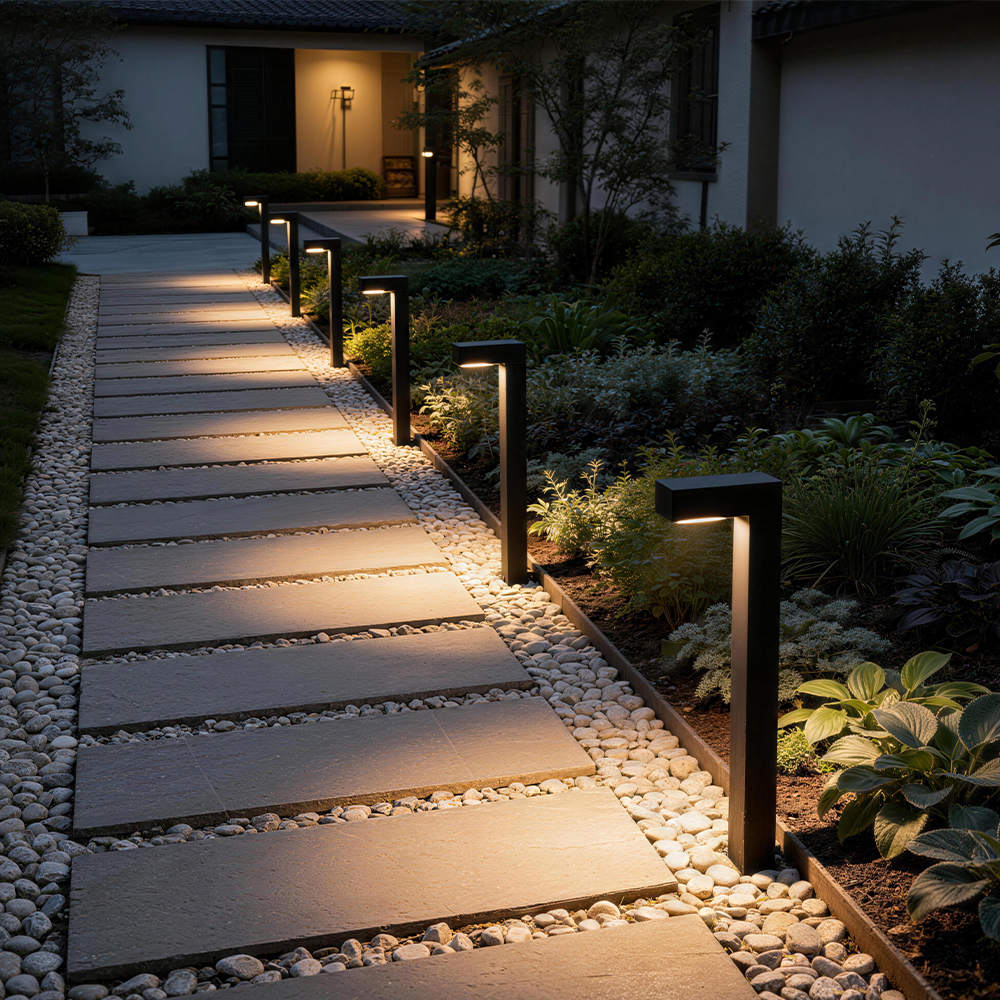
1. Incorrect Spacing Between Bollard Lights
The Mistake
Installing bollard lights too close or too far apart.
Why It Matters
Improper spacing leads to:
- Dark spots along pathways
- Overlapping brightness (wasted energy)
- Poor visual rhythm
Best Practice
Spacing depends on:
- Light output (lumens)
- Beam angle
- mounting height
General Guidelines
- Low output (200–400 lm): 2–3 meters apart
- Medium output (400–800 lm): 3–5 meters apart
Always perform a lighting layout calculation before installation.
2. Ignoring Mounting Height Proportions
The Mistake
Choosing bollard height without considering pathway scale.
Impact
- Too tall → glare and discomfort
- Too short → insufficient light coverage
Recommended Heights
| Application | Height |
|---|---|
| Garden pathways | 40–60 cm |
| Public walkways | 60–100 cm |
| Commercial areas | 80–120 cm |
Height must match human eye level and surrounding environment.
3. Poor Foundation Installation
The Mistake
Installing bollards directly into soil without proper foundation.
Consequences
- Fixture tilting over time
- Instability in strong winds
- Misalignment affecting lighting distribution
Correct Method
- Use a concrete base
- Install anchor bolts
- Ensure vertical alignment using a level tool
A stable foundation is essential for long-term durability.
4. Inadequate Waterproofing and Drainage
The Mistake
Ignoring water management during installation.
Common Problems
- Water accumulation at base
- Cable damage
- Electrical short circuits
Best Practices
- Use IP65 or higher fixtures
- Seal cable entry points
- Provide drainage layer (gravel or sand)
- Avoid low-lying water-prone areas
Water is the biggest threat to outdoor lighting systems.
5. Incorrect Cable Routing
The Mistake
Burying cables without protection.
Risks
- Mechanical damage
- Moisture penetration
- Difficult maintenance
Proper Installation
- Use PVC conduit pipes
- Keep connections in waterproof junction boxes
- Separate power lines from irrigation systems
6. Using Wrong Voltage System
The Mistake
Mixing incompatible voltage systems or using high voltage unnecessarily.
Issues
- Safety risks
- Installation complexity
- Higher maintenance
Recommendation
- Use 12V or 24V low-voltage systems for landscape lighting
- Use transformers with proper load capacity
Low voltage improves safety and simplifies installation.
7. Poor Glare Control
The Mistake
Installing bollards without considering light direction.
Effects
- Eye discomfort
- Reduced visibility
- Poor aesthetics
Solutions
- Choose fixtures with shielded or louvered design
- Avoid placing lights directly in line of sight
- Use downward lighting distribution
8. Uneven Alignment and Layout
The Mistake
Misaligned installation along pathways.
Result
- Unprofessional appearance
- Inconsistent lighting pattern
Best Practice
- Mark installation points before drilling
- Use string lines for alignment
- Maintain consistent spacing
9. Ignoring Surrounding Environment
The Mistake
Not considering trees, walls, or obstacles.
Impact
- Light blockage
- Uneven illumination
- Reduced effectiveness
Recommendation
- Evaluate surroundings before installation
- Adjust placement to avoid obstructions
10. Over-Lighting or Under-Lighting
The Mistake
Using incorrect lumen levels.
Problems
- Over-lighting → glare, energy waste
- Under-lighting → safety risks
Guidelines
- Pathways: 200–600 lumens per fixture
- Commercial areas: 600–1000 lumens
Balance is key.
11. Using Low-Quality Connectors
The Mistake
Using non-waterproof or poor-quality connectors.
Consequences
- Electrical failure
- Corrosion
- Short circuits
Solution
- Use IP67/IP68 waterproof connectors
- Apply silicone sealing where necessary
12. Neglecting Surge Protection
The Mistake
Ignoring voltage spikes in outdoor systems.
Risks
- Driver damage
- LED failure
Recommendation
- Use fixtures with surge protection (2–6kV)
- Install surge protectors for large projects
13. Skipping Pre-Installation Testing
The Mistake
Not testing lights before final installation.
Impact
- Hidden defects discovered later
- Costly rework
Best Practice
- Test all fixtures before installation
- Check wiring and connections
14. Incorrect Color Temperature Selection
The Mistake
Mixing inconsistent CCT values.
Result
- Visual inconsistency
- Poor aesthetic quality
Recommended CCT
- 3000K → residential
- 4000K → commercial
- 5000K → security
15. Lack of Maintenance Planning
The Mistake
Designing systems without considering maintenance access.
Consequences
- Difficult repairs
- Increased long-term cost
Solution
- Use accessible junction boxes
- Choose modular fixtures
16. Ignoring Local Regulations and Standards
The Mistake
Not following local electrical codes.
Risks
- Legal issues
- Safety hazards
Always comply with:
- Electrical standards
- Outdoor lighting regulations
17. Improper Fixture Selection for Environment
The Mistake
Using indoor-grade or low-IP fixtures outdoors.
Impact
- Rapid failure
- Corrosion
Choose fixtures with:
- Outdoor-rated materials
- UV resistance
- Anti-corrosion coating
18. Installation Without Lighting Design Plan
The Mistake
Installing lights without a layout plan.
Result
- Inefficient lighting
- Poor visual effect
Solution
- Create lighting plan
- Simulate layout if possible
- Consider beam angle and spacing
Conclusion
LED bollard lights are a powerful solution for outdoor pathway and landscape lighting—but only when installed correctly. Avoiding common installation mistakes ensures:
- Consistent and uniform lighting
- Long-term durability
- Reduced maintenance costs
- Enhanced safety and aesthetics
The key to success lies in combining:
- Proper planning
- Correct installation techniques
- High-quality components
In professional lighting projects, installation quality is just as important as product quality.