How to Choose LED Tree Flood Light for Outdoor Landscape Use?
Lighting trees is one of the most powerful techniques in landscape design. A well-chosen LED tree flood light can transform an ordinary garden into a visually striking nighttime environment—highlighting textures, creating depth, and enhancing safety.
However, selecting the right LED flood light for trees is not as simple as choosing wattage. It requires a clear understanding of lighting purpose, beam angle, lumen output, installation position, and durability.
This guide explains how to choose the right LED tree flood light for outdoor landscape use with professional-level insights.
1. Define the Lighting Purpose First
Before selecting specifications, clarify what effect you want to achieve.
Common tree lighting techniques include:
1.1 Uplighting (Most Common)
- Light is projected from ground upward
- Highlights trunk, branches, and canopy
- Creates dramatic shadows
1.2 Flood Lighting
- Wide beam illuminates entire tree
- Suitable for large trees or group planting
1.3 Silhouette Lighting
- Light placed behind tree
- Creates shadow effect against walls
1.4 Moonlighting
- Light mounted high above tree
- Simulates natural moonlight
? The purpose directly determines beam angle, brightness, and placement.
2. Choose the Right Lumen Output (Brightness)
Lumens—not wattage—determine brightness.
Recommended Lumens for Tree Lighting
| Tree Size | Recommended Lumens |
|---|---|
| Small trees | 200–400 lm |
| Medium trees | 400–800 lm |
| Large trees | 800–2000+ lm |
For accent lighting, 200–800 lumens is typically sufficient
For large landscape flood lighting, brightness can exceed 4000 lumens
? Avoid over-lighting. Too much brightness destroys natural aesthetics.
3. Select the Correct Beam Angle
Beam angle determines how light spreads across the tree.
Beam Angle Guide
| Beam Angle | Effect | Application |
|---|---|---|
| 10°–25° | Narrow spotlight | Tree trunk highlighting |
| 25°–60° | Medium beam | General tree lighting |
| 60°–120° | Wide flood | Large tree canopy |
- Narrow beams create dramatic, focused effects
- Wide beams provide soft, uniform illumination
? For most trees, 30°–60° is the best balance
4. Consider Lighting Distance and Angle
Distance and angle dramatically affect performance.
Professional recommendation:
- Install light at 30° angle toward tree
- Place fixture 1/3 to 1/2 of tree height away
Example:
- 5m tree → place light 2–3m away
This ensures:
- Even illumination
- Reduced glare
- Better shadow control
5. Choose the Right Color Temperature (CCT)
Color temperature affects atmosphere and visual perception.
| CCT | Effect | Application |
|---|---|---|
| 2700K–3000K | Warm, natural | Gardens, residential |
| 4000K | Neutral, clear | Commercial landscapes |
| 5000K–6500K | Bright, sharp | Security lighting |
Warm white is most popular for landscape design because it:
- Enhances natural colors
- Creates a relaxing ambiance
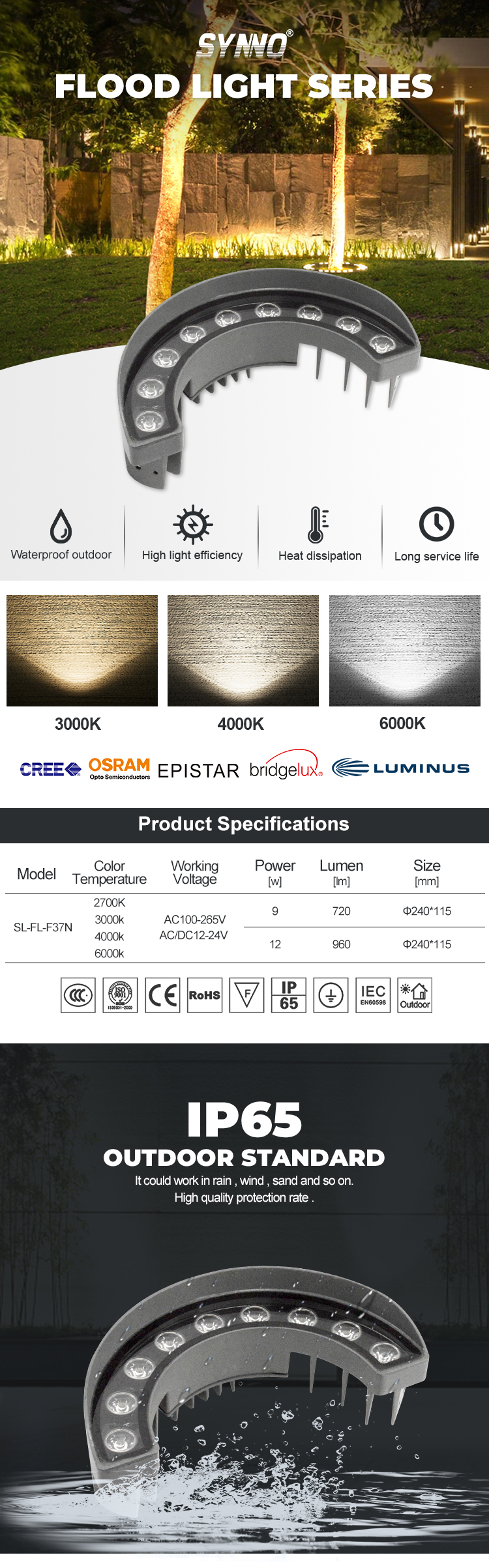
6. Check Waterproof and Outdoor Protection (IP Rating)
Outdoor tree lighting must withstand harsh conditions.
Minimum requirements:
- IP65 – rain and dust protection
- IP66/IP67 – heavy outdoor environments
A high IP rating ensures long-term durability
7. Focus on Heat Dissipation and Material
LED flood lights generate heat. Poor heat management reduces lifespan.
Look for:
- Die-cast aluminum housing
- Integrated heat sink design
- Corrosion-resistant coating
Good thermal design ensures 30,000–50,000 hours lifespan
8. Select Adjustable Fixtures
Tree lighting requires flexibility.
Choose lights with:
- Adjustable brackets
- Rotatable heads
- Flexible beam direction
This allows fine-tuning after installation.
9. Glare Control and Light Pollution
Improper lighting causes:
- Eye discomfort
- Light pollution
- Poor visual results
Best practices:
- Use shielded fixtures
- Angle lights downward slightly
- Avoid overshooting beyond tree canopy
10. Voltage Selection: Low Voltage vs High Voltage
Low Voltage (12V / 24V)
- Safer for outdoor use
- Easier installation
- Ideal for residential landscapes
High Voltage (110–240V)
- Suitable for large-scale projects
- Requires professional installation
Low voltage is preferred in most landscape projects.
11. Determine Number of Lights per Tree
Number of fixtures depends on tree size.
Guidelines:
- Small tree → 1 light
- Medium tree → 1–2 lights
- Large tree → 2–3 lights
Professional technique:
- Place lights 120° apart around tree for uniform lighting
12. Consider CRI (Color Rendering Index)
CRI affects how natural colors appear.
- CRI >70 → standard outdoor
- CRI >80 → premium landscape lighting
Higher CRI enhances:
- Bark texture
- Leaf color
- Natural appearance
13. Mounting Options for Tree Flood Lights
Common installation methods:
Ground Mount
- Most common
- Easy installation
- Ideal for uplighting
Spike Mount
- Flexible positioning in soil
Surface Mount
- Used on hard surfaces
14. Match Fixture Size to Landscape
Small fixtures:
- Less visible
- Better for residential design
Large fixtures:
- Higher output
- Suitable for commercial projects
Physical size affects both aesthetics and installation
15. Smart Control Options (Optional)
Modern systems may include:
- Dimming control
- Timer settings
- Smart app control
- RGB color-changing
Useful for:
- Hotels
- Resorts
- Smart homes
16. Common Mistakes to Avoid
❌ Choosing by wattage instead of lumens
❌ Using overly wide beam for small trees
❌ Ignoring waterproof rating
❌ Installing lights too close to tree
❌ Over-lighting (ruins natural effect)
17. Practical Example (Professional Setup)
Medium garden tree (4m height)
- 2 × 10W LED flood lights
- 600 lumens each
- 36° beam angle
- 3000K warm white
- Installed 2m away at 30° angle
Result:
- Balanced illumination
- Soft shadows
- Natural aesthetic
Conclusion
Choosing the right LED tree flood light is a combination of technical selection and lighting design strategy. Instead of focusing only on power, professionals evaluate:
- Lighting purpose
- Lumen output
- Beam angle
- Installation distance
- Color temperature
- Durability
When these factors are properly balanced, LED flood lights can transform trees into visual focal points, adding depth, safety, and elegance to any outdoor space.