Different Types of LED Hardscape Lights: Paver, Step, Wall, and Retaining Wall Lights
Outdoor lighting has evolved far beyond simple illumination. Today, it is an integral part of landscape architecture, safety planning, and aesthetic design. Among the most versatile and increasingly popular solutions are LED hardscape lights—fixtures specifically engineered to integrate seamlessly into built structures such as stone, concrete, brick, and wood.
LED hardscape lighting offers a combination of durability, low-profile installation, energy efficiency, and modern design, making it ideal for residential, commercial, and public outdoor environments.
This article provides a comprehensive breakdown of the different types of LED hardscape lights, focusing on four major categories:
- Paver lights
- Step lights
- Wall lights
- Retaining wall lights
We will explore their structure, applications, technical features, and how to select the right type for your project.
1. What Are LED Hardscape Lights?
LED hardscape lights are integrated lighting fixtures designed to be installed within or onto structural landscape elements. Unlike traditional fixtures that sit above ground, these lights are:
- Embedded into surfaces
- Hidden within construction materials
- Designed for long-term outdoor exposure
They are commonly used in:
- Pathways and patios
- Stairs and decks
- Garden walls
- Retaining structures
- Driveways and plazas
2. Key Advantages of LED Hardscape Lighting
Before examining each type, it’s important to understand why hardscape lights are widely preferred:
2.1 Seamless Integration
Fixtures blend into architecture, creating a clean, minimalist look.
2.2 Durability
Built to withstand:
- Weather exposure
- Mechanical pressure
- Temperature fluctuations
2.3 Safety Enhancement
Improves visibility in:
- Walkways
- Steps
- Edges and boundaries
2.4 Energy Efficiency
LED technology reduces power consumption while maintaining strong performance.
3. Paver Lights
3.1 What Are Paver Lights?
Paver lights are compact, load-bearing fixtures installed directly into:
- Brick pavers
- Stone pathways
- Driveways
- Concrete slabs
They are designed to sit flush with the surface, making them safe for walking and even vehicle traffic.
3.2 Key Features
- High compressive strength
- IP67/IP68 waterproof rating
- Anti-slip glass surface
- Stainless steel or aluminum housing
- Low-profile design
3.3 Applications
Paver lights are ideal for:
- Garden pathways
- Walkways
- Driveways
- Outdoor plazas
- Pool surrounds
3.4 Design Tips
- Space lights evenly (1–3 meters apart)
- Use low lumen output (50–150 lumens)
- Avoid excessive brightness to reduce glare
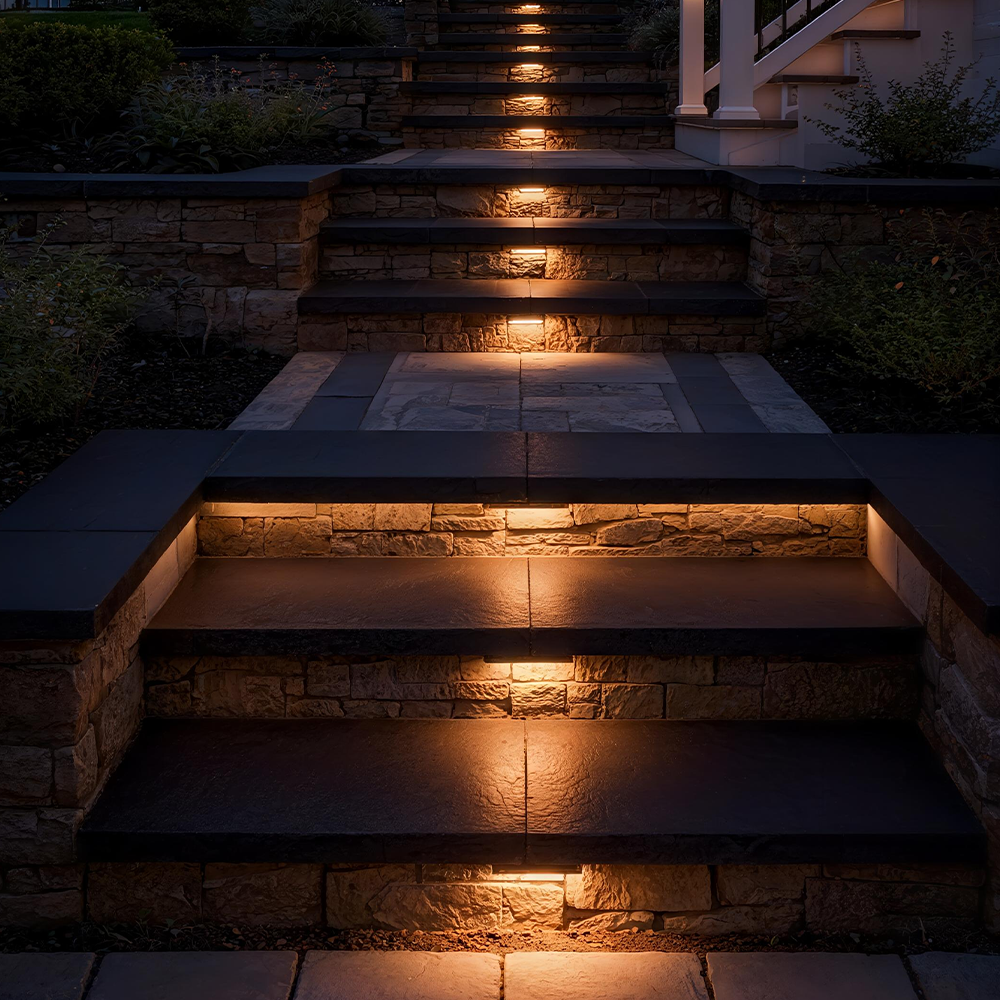
4. Step Lights
4.1 What Are Step Lights?
Step lights are fixtures specifically designed for staircases and elevation changes. They are installed on:
- Stair risers
- Side walls
- Under step edges
4.2 Key Features
- Low-glare illumination
- Directional light output
- Compact size
- Durable housing
- IP65 or higher protection
4.3 Applications
Step lights are commonly used in:
- Garden steps
- Deck stairs
- Outdoor staircases
- Indoor architectural stairs
4.4 Design Tips
- Install at consistent intervals
- Ensure uniform brightness across all steps
- Use warm white (3000K) for residential areas
5. Wall Lights (Hardscape Integration Type)
5.1 What Are Hardscape Wall Lights?
These are integrated wall-mounted fixtures installed into:
- Exterior walls
- Garden structures
- Architectural facades
They differ from traditional wall lamps because they are often recessed or partially embedded.
5.2 Key Features
- Modern, minimalist design
- Wide beam distribution
- Anti-glare optical design
- Durable weatherproof construction
5.3 Applications
Wall lights are suitable for:
- Building exteriors
- Courtyard walls
- Outdoor corridors
- Perimeter lighting
5.4 Design Tips
- Mount at 1.5–2.5 meters height
- Use consistent spacing for uniform lighting
- Select neutral white (4000K) for clarity
6. Retaining Wall Lights
6.1 What Are Retaining Wall Lights?
Retaining wall lights are installed directly into or under the capstones of:
- Stone retaining walls
- Concrete garden walls
- Raised planters
They provide downward illumination, enhancing both safety and aesthetics.
6.2 Key Features
- Linear or strip-style design
- Hidden installation under wall caps
- Downward light distribution
- Weather-resistant housing
6.3 Applications
Ideal for:
- Garden retaining walls
- Landscape terraces
- Outdoor seating areas
- Boundary definition
6.4 Design Tips
- Install under wall caps for hidden effect
- Maintain consistent spacing
- Use soft warm lighting for ambiance
7. Comparison of Hardscape Light Types
| Feature | Paver Lights | Step Lights | Wall Lights | Retaining Wall Lights |
|---|---|---|---|---|
| Installation | Ground embedded | Steps/walls | Wall surface | Wall cap integration |
| Main Purpose | Path marking | Safety | General lighting | Accent + safety |
| Load Bearing | Yes | No | No | No |
| Beam Direction | Upward | Forward/downward | Wide | Downward |
| Glare Control | Moderate | High | Moderate | High |
8. Choosing the Right Hardscape Light for Your Project
Consider the following factors:
8.1 Application Area
- Pathways → Paver lights
- Stairs → Step lights
- Walls → Wall lights
- Landscape structures → Retaining wall lights
8.2 Brightness Requirements
Avoid over-lighting. Use:
- 50–150 lumens for subtle lighting
- Higher output only when necessary
8.3 Color Temperature
- 3000K for residential
- 4000K for commercial
- 5000K+ for security areas
8.4 Installation Method
Ensure compatibility with:
- Construction materials
- Wiring access
- Mounting structure
9. Voltage Options: Low Voltage vs Line Voltage
Low Voltage (12V/24V)
- Safer
- Easier installation
- Ideal for landscape projects
Line Voltage (110–240V)
- Suitable for large-scale commercial installations
- Requires professional installation
10. Waterproof and Durability Standards
Outdoor hardscape lights should meet:
- IP65 minimum (surface-mounted)
- IP67/IP68 for embedded fixtures
Also consider:
- Corrosion resistance
- UV resistance
- Impact rating (IK08 or higher)
11. Maintenance Considerations
- Clean lenses periodically
- Check waterproof seals
- Inspect wiring connections
- Replace faulty drivers if necessary
Conclusion
LED hardscape lighting offers a versatile and modern solution for outdoor illumination. By understanding the differences between paver lights, step lights, wall lights, and retaining wall lights, you can design lighting systems that are both functional and visually appealing.
Each type serves a unique purpose:
- Paver lights define pathways
- Step lights enhance safety
- Wall lights provide general illumination
- Retaining wall lights create architectural accents
When selected and installed correctly, LED hardscape lights deliver:
- Long-term durability
- Energy efficiency
- Enhanced safety
- High-end visual impact
For professional outdoor lighting design, combining these different types strategically will achieve the best results.