What Is an LED Wall Bulkhead Light? Definition, Structure, and Uses
Outdoor lighting is a critical component of modern architectural and landscape design. Among the many fixture types available, LED wall bulkhead lights have earned a strong reputation for reliability, durability, and functional performance in demanding environments. Often used in residential, commercial, and industrial settings, these fixtures are recognized for their robust construction, glare-controlled illumination, and ability to operate consistently in outdoor conditions.
In this article, we will explore what an LED wall bulkhead light is, how it is constructed, how it works, and where it is best used. We will also explain how bulkhead lights differ from other types of LED wall lights and outdoor wall lamps, helping project owners, designers, and distributors make informed decisions.
1. What Is an LED Wall Bulkhead Light?
1.1 Basic Definition
An LED wall bulkhead light is a wall-mounted outdoor lighting fixture designed with a protective housing that encloses the light source. Originally inspired by marine lighting used on ships and industrial buildings, bulkhead lights are engineered to withstand harsh environments, moisture, dust, impact, and vibration.
Today’s LED bulkhead lights combine this rugged structure with modern LED technology, making them:
-
Energy-efficient
-
Long-lasting
-
Low-maintenance
-
Highly reliable in outdoor applications
They are widely used as outdoor wall lamps in corridors, staircases, building perimeters, garages, balconies, walkways, and service areas.
1.2 Why the Term “Bulkhead”?
The term “bulkhead” comes from maritime architecture, where bulkheads are vertical partitions inside ships. Early bulkhead lights were mounted on these partitions to provide safe illumination in damp and vibration-prone environments. Over time, the concept was adopted into architecture, and today, bulkhead lights are a standard form of exterior wall lighting fixture used worldwide.
2. Key Characteristics of LED Wall Bulkhead Lights
LED wall bulkhead lights are defined by several distinguishing features:
-
Enclosed, sealed structure
-
Impact-resistant housing
-
Moisture and dust protection (IP65 or higher)
-
Diffused, glare-reduced light output
-
Surface-mounted wall installation
-
Long operational life
These qualities make them a preferred type of outdoor LED wall light for functional and safety-focused lighting applications.
3. Structure of an LED Wall Bulkhead Light
Understanding the structure of a bulkhead light helps explain why it performs so well in demanding environments.
3.1 Housing (Body)
The housing is typically made from:
-
Die-cast aluminum
-
High-impact polycarbonate
-
Stainless steel (for marine environments)
This housing protects internal components from mechanical damage and weather exposure. Compared to decorative outdoor wall lamps, bulkhead housings are more robust and industrial in design.
3.2 Diffuser (Lens)
The diffuser is the front cover that:
-
Protects the LED module
-
Softens and spreads light evenly
-
Reduces glare
Common diffuser materials include:
-
Frosted polycarbonate
-
Tempered glass
-
UV-resistant acrylic
This design ensures visual comfort even when installed at eye level, making bulkhead lights suitable for walkway wall lighting and entrance wall lighting.
3.3 LED Light Source
Modern bulkhead fixtures use integrated LED modules rather than replaceable bulbs. These modules provide:
-
High efficiency
-
Stable color output
-
Long lifespan (50,000+ hours)
-
Low heat generation
This is a major upgrade from traditional CFL or halogen wall lamps.
3.4 Driver (Power Supply)
The LED driver:
-
Converts AC power to stable DC output
-
Protects LEDs from voltage fluctuations
-
Ensures consistent light performance
High-quality drivers are critical for outdoor wall lamps exposed to temperature variations.
3.5 Sealing and Gaskets
Rubber or silicone gaskets seal the fixture at all connection points, achieving:
-
Water resistance
-
Dust protection
-
Insect prevention
This is why bulkhead lights are commonly used in wet areas where other LED wall lights might fail.
3.6 Mounting Base
Bulkhead lights are typically surface-mounted using:
-
Wall screws
-
Backplate mounting systems
This allows quick installation on concrete, brick, metal, or wooden walls.
4. Working Principles of LED Wall Bulkhead Lights
An LED wall bulkhead light operates on a simple but highly efficient principle:
-
Electrical power is supplied to the driver
-
The driver regulates current to the LED module
-
LEDs emit light with minimal heat loss
-
The diffuser spreads light evenly across the surface
Unlike traditional outdoor wall lamps, LED bulkhead lights do not rely on filament heating or gas discharge, making them far more efficient and durable.
5. Types of LED Wall Bulkhead Lights
5.1 Round Bulkhead Lights
The most traditional design, often used in:
-
Corridors
-
Stairwells
-
Service areas
-
Residential buildings
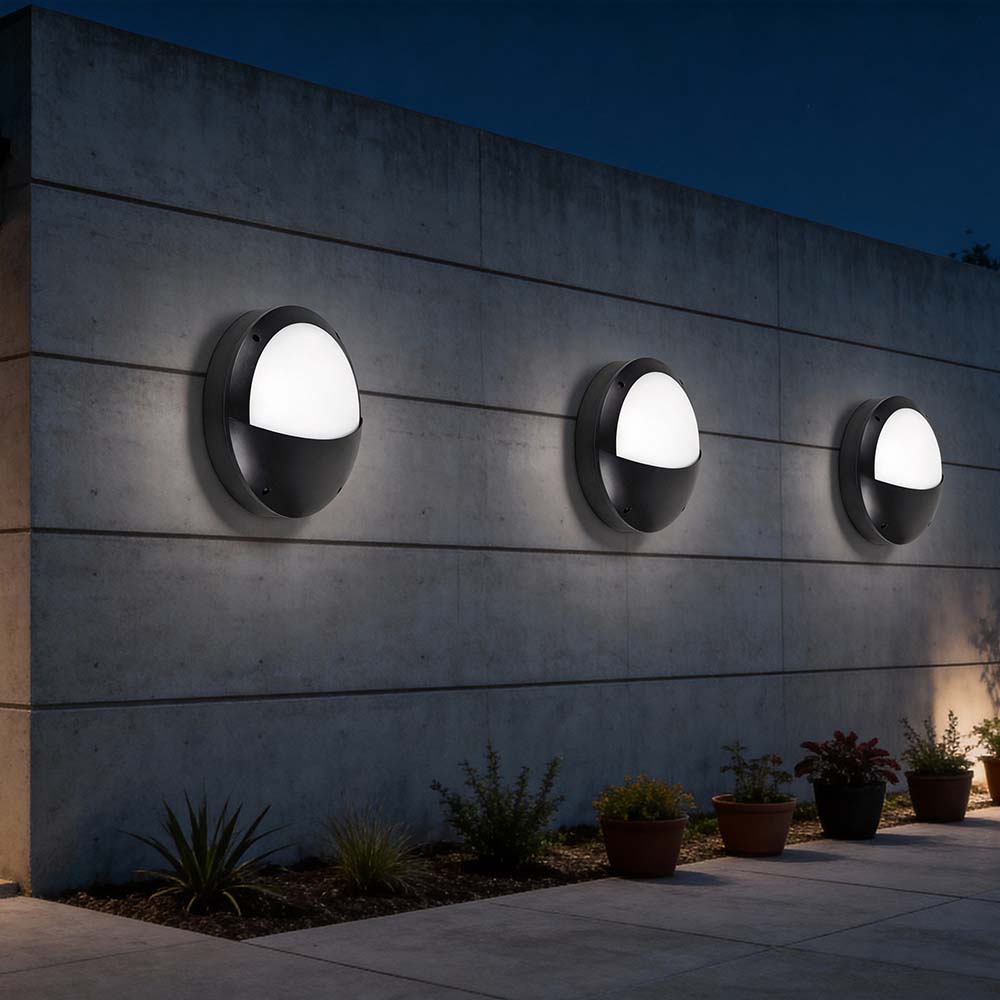
5.2 Oval Bulkhead Lights
A more modern alternative with better light distribution along horizontal walkways.
5.3 Rectangular Bulkhead Lights
Common in commercial and industrial projects where a contemporary appearance is required.
5.4 LED Bulkhead with Sensor
These include:
-
Motion sensors
-
Dusk-to-dawn sensors
-
Microwave or PIR sensors
Sensor-equipped models are ideal for energy-saving outdoor wall lamp applications.
5.5 Emergency LED Bulkhead Lights
Used in:
-
Escape routes
-
Staircases
-
Fire exits
These models include backup batteries for emergency operation.
6. Applications of LED Wall Bulkhead Lights
6.1 Residential Applications
In homes and apartments, LED bulkhead wall lights are commonly installed as:
-
Balcony wall lights
-
Staircase wall lamps
-
Outdoor corridor lights
-
Garage wall lighting
-
Backyard service lighting
Their durability and low glare make them practical alternatives to decorative outdoor wall lamps.
6.2 Commercial Applications
Commercial properties use bulkhead lights for:
-
Building perimeters
-
Office entrances
-
Parking structures
-
Service corridors
-
Emergency exits
They are often specified as commercial LED wall lights for safety and compliance.
6.3 Industrial Applications
Factories and warehouses rely on bulkhead lights for:
-
Harsh environments
-
Dusty or humid areas
-
Maintenance zones
-
Equipment rooms
Their rugged construction outperforms standard LED wall fixtures in industrial conditions.
6.4 Hospitality and Public Spaces
Hotels, resorts, and public facilities use modern bulkhead designs to provide:
-
Discreet wall lighting
-
Safe nighttime navigation
-
Durable fixtures for high-traffic areas
7. Benefits of Using LED Wall Bulkhead Lights
7.1 Durability
Bulkhead lights are built to last in extreme environments, outperforming many decorative outdoor wall lamps.
7.2 Energy Efficiency
LED technology reduces energy consumption by up to 70% compared to traditional wall lamps.
7.3 Low Maintenance
Integrated LEDs eliminate bulb replacement and reduce service costs.
7.4 Safety and Visibility
Uniform light distribution improves safety in corridors, stairways, and walkways.
7.5 Glare Control
Diffused lenses provide comfortable illumination without harsh brightness.
8. LED Wall Bulkhead Lights vs. Other LED Wall Lights
| Feature | Bulkhead Light | Decorative Wall Lamp |
|---|---|---|
| Durability | Very high | Moderate |
| Weather resistance | Excellent | Varies |
| Glare control | Good | Depends on design |
| Design flexibility | Moderate | High |
| Maintenance | Very low | Medium |
Bulkhead lights prioritize function and reliability, while decorative wall lamps focus on aesthetics.
9. How to Choose the Right LED Wall Bulkhead Light
When selecting a bulkhead light, consider:
-
Installation location
-
Required IP rating
-
Light output
-
Color temperature
-
Housing material
-
Sensor or smart control options
For outdoor environments, always prioritize protection rating and durability.
10. Installation Tips for Outdoor Wall Bulkhead Lights
-
Mount at consistent heights for uniform appearance
-
Avoid direct line-of-sight glare
-
Use proper waterproof cable entries
-
Ensure secure mounting on solid surfaces
Professional installation ensures long-term performance and safety.
11. Common Mistakes to Avoid
-
Choosing indoor-rated fixtures for outdoor use
-
Installing at eye level without glare control
-
Ignoring IP rating requirements
-
Using low-quality drivers
12. Trends in Modern LED Wall Bulkhead Lighting
Modern designs now feature:
-
Slim profiles
-
Integrated sensors
-
Smart control compatibility
-
Architectural finishes
-
Improved optical efficiency
These innovations make bulkhead lights suitable for both functional and architectural applications.
13. Sustainability and Environmental Benefits
LED bulkhead lights:
-
Reduce carbon footprint
-
Lower energy demand
-
Minimize waste through long lifespan
-
Support green building standards
They are a responsible choice for environmentally conscious projects.
14. Why LED Wall Bulkhead Lights Remain Essential
Despite the availability of decorative wall lamps, bulkhead lights remain indispensable in:
-
High-traffic areas
-
Safety-critical zones
-
Harsh environments
-
Utility spaces
Their performance and reliability cannot be easily replaced by purely aesthetic fixtures.
15. Conclusion
An LED wall bulkhead light is more than just a basic outdoor lighting fixture. It is a robust, reliable, and efficient outdoor wall lamp designed to deliver consistent illumination in challenging environments. With a sealed structure, glare-controlled output, and long-lasting LED technology, bulkhead lights provide unmatched value for residential, commercial, and industrial projects.
Whether used as a wall-mounted outdoor light for walkways, staircases, balconies, or building perimeters, LED bulkhead lights continue to play a vital role in modern lighting design. By understanding their structure, working principles, and applications, you can confidently select the right bulkhead lighting solution for your next project