Case Study: Enhancing a Pathway Landscape with LED Bollard Light
Pathway lighting plays a fundamental role in outdoor landscape design. Beyond basic illumination, a well-executed pathway lighting system improves pedestrian safety, strengthens spatial orientation, enhances landscape aesthetics, and elevates the overall nighttime experience. Among the various outdoor lighting solutions available today, LED bollard lights—often categorized alongside LED lawn lights and LED pathway lights—have become a preferred choice for modern residential, commercial, and public environments.
This case study examines a real-world pathway landscape project where LED bollard lights were used as the primary lighting solution. By analyzing the design intent, lighting challenges, product selection process, installation strategy, and final results, this article provides practical insights for landscape architects, lighting designers, project developers, and distributors seeking reliable outdoor lighting solutions.
1. Project Background
1.1 Project Overview
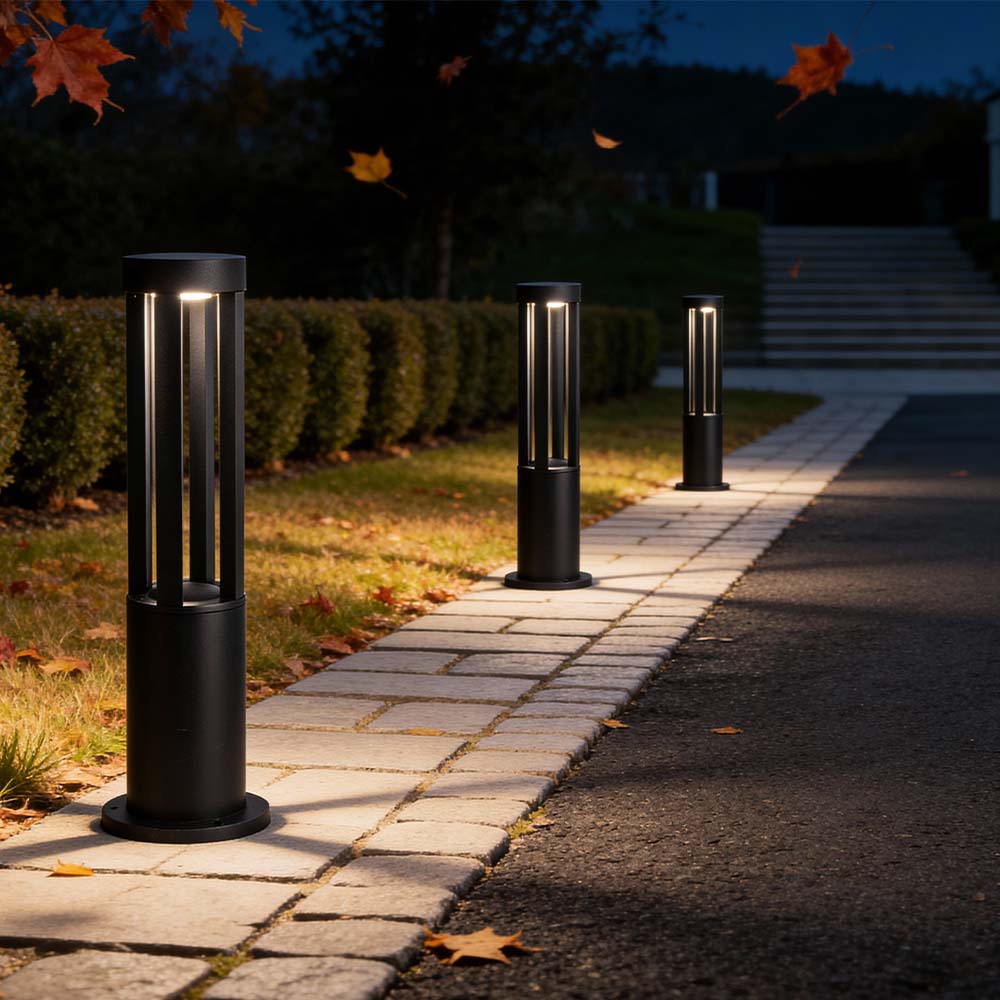
The project site is a landscaped pedestrian pathway within a medium-sized residential community combined with shared public green spaces. The pathway connects residential buildings, parking areas, and communal gardens, making it a high-frequency circulation route used during both daytime and nighttime hours.
The pathway features:
-
Curved walkways with gentle slopes
-
Lawn areas and low ornamental plants
-
Trees and shrubs along both sides
-
Seating areas and rest zones
Given the setting, the client required a lighting solution that would function as both LED pathway lighting and decorative lawn lighting, blending seamlessly with the landscape.
1.2 Existing Lighting Issues
Before renovation, the pathway lighting suffered from several shortcomings:
-
Insufficient brightness in certain areas
-
Uneven illumination along curved sections
-
Excessive glare from outdated fixtures
-
Poor visual harmony with surrounding lawns and plants
-
High maintenance frequency
Traditional wall-mounted fixtures and high pole lights were either ineffective or visually intrusive. The project team decided to replace them with a dedicated LED bollard light system, positioned as a modern alternative to conventional LED lawn lights and garden pathway lights.
2. Design Objectives
The lighting design was guided by a clear set of functional, aesthetic, and technical goals.
2.1 Functional Goals
-
Ensure safe pedestrian movement at night
-
Clearly define pathway edges
-
Improve visibility without excessive brightness
2.2 Aesthetic Goals
-
Integrate lighting with lawn and planting design
-
Maintain a clean appearance during daytime
-
Create a warm and welcoming nighttime atmosphere
2.3 Technical Goals
-
Reduce energy consumption using LED technology
-
Minimize maintenance and replacement costs
-
Use weather-resistant outdoor lighting fixtures
LED bollard lights, often classified as low-height LED lawn lamps or landscape pathway lights, met all these requirements.
3. Why LED Bollard Lights Were Chosen
3.1 Bollard Lights as Lawn and Pathway Lighting
LED bollard lights are frequently used as:
-
LED pathway lights for walkways
-
LED lawn lights for garden borders
-
Landscape guidance lights for outdoor circulation
Their moderate height allows them to illuminate walking surfaces effectively while remaining visually unobtrusive.
3.2 Advantages Over Traditional LED Lawn Lights
Compared with spike-type lawn lamps or ground-mounted fixtures, LED bollard lights offer:
-
Better glare control
-
More uniform light distribution
-
Higher durability against impact and weather
-
Strong visual guidance along paths
Unlike decorative LED garden lawn lights that focus primarily on aesthetics, bollard lights provide a balance between functional pathway lighting and landscape decoration.
3.3 Comparison with Other Pathway Lighting Options
| Lighting Type | Suitability for Pathways | Main Limitations |
|---|---|---|
| Spike lawn lights | Moderate | Less uniform illumination |
| Inground lights | Accent only | Limited coverage |
| Pole lights | Poor | Excessive brightness |
| LED bollard lights | Excellent | Requires proper spacing |
This comparison reinforced the decision to adopt LED bollard lights as the primary LED pathway lighting solution.
4. Product Selection Criteria
Selecting the right LED bollard light was critical to the project’s success.
4.1 Optical Design
The selected bollard lights featured:
-
Downward-facing light distribution
-
Asymmetric optics for pathway coverage
-
Shielded light sources to reduce glare
This ensured comfortable illumination comparable to high-quality LED path lights while preventing light spill into adjacent lawns.
4.2 Light Output and Color Temperature
Key specifications included:
-
Moderate lumen output optimized for pedestrian use
-
Warm white color temperature (3000K)
-
High color consistency across fixtures
The warm tone complemented the green lawn areas and created a natural nighttime ambiance, often desired in LED lawn lighting applications.
4.3 Housing and Finish
The fixtures were constructed from:
-
Die-cast aluminum
-
Anti-corrosion outdoor coating
-
Neutral matte finish
This design ensured durability and visual compatibility with both modern and traditional garden landscapes.
4.4 Energy Efficiency
High-efficiency LEDs and stable drivers allowed:
-
Low power consumption
-
Long service life
-
Reduced operating costs
These features made the bollard lights a cost-effective alternative to traditional outdoor LED pathway lights.
5. Lighting Layout and Planning
5.1 Pathway Analysis
Before installation, the design team analyzed:
-
Path width and curvature
-
Pedestrian flow patterns
-
Lawn and planting heights
-
Sightlines and potential glare points
5.2 Spacing Strategy
LED bollard lights were installed at consistent intervals along the pathway:
-
Closer spacing on curves
-
Wider spacing on straight sections
-
Offset placement to avoid visual monotony
This approach ensured smooth illumination similar to continuous LED path lighting systems.
5.3 Integration with Lawn Areas
In wider sections, bollard lights also functioned as LED lawn lights, gently illuminating grass areas and defining landscape edges without overpowering the scene.
6. Installation Considerations
6.1 Foundation and Cabling
Each bollard was installed with:
-
Stable ground anchoring
-
Waterproof underground cabling
-
Easy-access wiring points
Proper installation ensured long-term performance in outdoor environments.
6.2 Height Selection
The selected bollard height balanced:
-
Visual presence
-
Light distribution
-
Human-scale proportions
This height was ideal for combining pathway lighting with lawn illumination.
6.3 Commissioning and Adjustment
After installation:
-
Light levels were measured
-
Glare was evaluated from pedestrian viewpoints
-
Minor adjustments were made to optimize uniformity
7. Visual and Functional Results
7.1 Improved Nighttime Safety
Post-installation evaluations showed:
-
Clear visibility along the entire pathway
-
Reduced shadow areas
-
Improved pedestrian confidence
Residents reported feeling safer using the path at night.
7.2 Enhanced Landscape Appearance
The LED bollard lights:
-
Created a rhythmic visual pattern
-
Highlighted lawn textures
-
Complemented surrounding plants and trees
The lighting enhanced the overall garden atmosphere without appearing artificial.
7.3 Balanced Brightness
Unlike overly bright fixtures, the bollard lights delivered:
-
Comfortable illumination
-
Low glare
-
Natural transitions between light and shadow
This balance is essential for high-quality LED pathway light design.
8. Energy and Maintenance Performance
8.1 Energy Savings
Compared to the previous system:
-
Power consumption was significantly reduced
-
Light output efficiency improved
-
Overall energy costs decreased
The project demonstrated the long-term benefits of modern LED lawn lighting solutions.
8.2 Reduced Maintenance
The LED bollard lights required:
-
Minimal cleaning
-
No frequent lamp replacements
-
Low maintenance intervention
This was particularly valuable for property management teams.
9. User and Client Feedback
9.1 Resident Response
Residents highlighted:
-
Pleasant lighting color
-
Improved nighttime visibility
-
Enhanced sense of order and comfort
9.2 Client Satisfaction
The client appreciated:
-
Improved visual quality of the landscape
-
Lower operational costs
-
Professional appearance of the lighting system
10. Lessons Learned from the Project
10.1 Bollard Lights Excel in Pathway Applications
LED bollard lights proved to be one of the most effective forms of LED pathway lighting when safety and aesthetics are equally important.
10.2 Lawn Lighting Should Be Subtle
As LED lawn lights, bollard fixtures should enhance rather than dominate the landscape.
10.3 Optics and Placement Matter More Than Wattage
Proper light distribution delivers better results than higher power consumption.
11. Best Practices for Similar Projects
Based on this case study:
-
Choose warm color temperatures for residential paths
-
Use consistent spacing for visual rhythm
-
Avoid excessive brightness
-
Coordinate pathway lighting with lawn and garden design
-
Test lighting effects at night before final approval
12. Future Upgrades and Opportunities
Potential future enhancements include:
-
Smart control integration
-
Motion-based dimming
-
Time scheduling
-
Integration with other landscape lighting systems
These upgrades can further improve efficiency and user experience.
13. Conclusion
This case study demonstrates how LED bollard lights can successfully enhance a pathway landscape when thoughtfully designed and properly installed. Acting as both LED pathway lights and LED lawn lights, bollard fixtures provide safe, comfortable, and visually appealing illumination that integrates seamlessly with outdoor environments.
By prioritizing glare control, optical performance, and landscape harmony, the project achieved a lighting solution that improves nighttime safety while elevating the overall character of the space. For residential communities, public walkways, and commercial landscapes, LED bollard lights represent a proven and versatile solution for modern outdoor lighting needs.