LED Garden Spot Lights vs. Traditional Garden Lights: Efficiency Comparison
Outdoor garden light plays an essential role in modern landscape design, shaping the way residential and commercial spaces are experienced after sunset. For decades, traditional garden lights—such as halogen, incandescent, and compact fluorescent fixtures—were the default choice for illuminating plants, pathways, and architectural features. However, the rapid development of LED technology has fundamentally changed the efficiency, performance, and economics of outdoor lighting.
Today, LED garden spot lights are widely regarded as the superior option, especially when efficiency, durability, and long-term cost savings are considered. But what does “efficiency” really mean in the context of garden lighting? Is it just about energy consumption, or does it also involve light output, lifespan, maintenance, environmental impact, and design flexibility?
This article provides a detailed, professional comparison between garden spot lights and traditional garden lights, examining efficiency from multiple technical and practical perspectives to help property owners, landscape designers, and lighting professionals make informed decisions.
1. Understanding Garden Spot Lighting
1.1 What Are Garden Spot Lights?
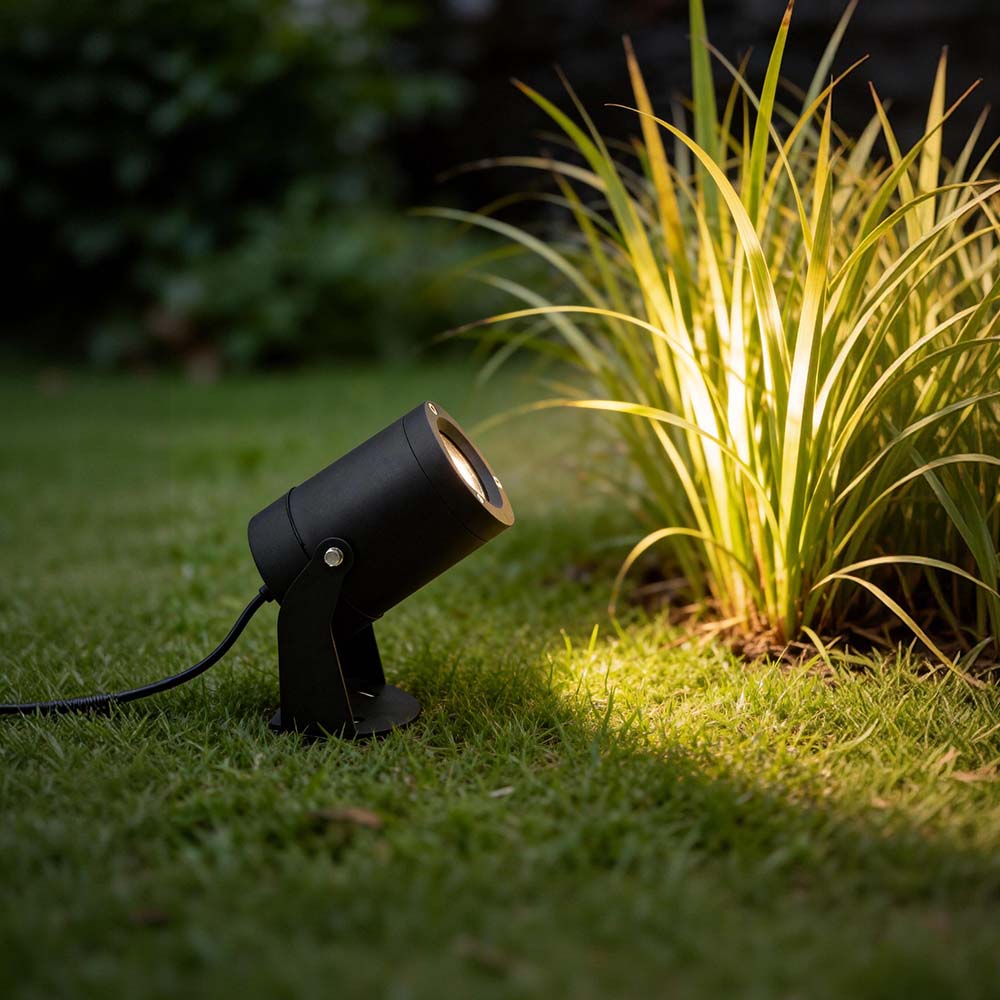
Garden spot lights are directional outdoor luminaires designed to highlight specific landscape elements such as trees, shrubs, sculptures, walls, and architectural features. Unlike pathway or area lights, spot lights concentrate light in a defined beam, creating contrast and depth in outdoor environments.
They are commonly used for:
-
Uplighting trees and plants
-
Highlighting façades and garden structures
-
Creating visual focal points
-
Adding depth to layered landscape lighting designs
1.2 Traditional Garden Lights Explained
Traditional garden lighting typically includes:
-
Incandescent spot lights
-
Halogen garden spot lights
-
Compact fluorescent (CFL) outdoor fixtures
-
Metal halide landscape lights
These technologies dominated the market before LED lighting became commercially viable and affordable.
2. Defining Efficiency in Outdoor Garden Lighting
When comparing efficiency, it is important to consider more than just wattage. True efficiency includes:
-
Energy efficiency (lumens per watt)
-
Optical efficiency (usable light delivered)
-
Thermal efficiency (heat management)
-
Operational lifespan
-
Maintenance efficiency
-
Environmental efficiency
-
System efficiency (control and compatibility)
LED garden spot lights outperform traditional fixtures in all these areas.
3. Energy Consumption Comparison
3.1 Wattage Requirements
Traditional garden spot lights require significantly more power to produce the same brightness as LED fixtures.
| Light Type | Typical Power Consumption | Equivalent LED Power |
|---|---|---|
| Incandescent | 40–60W | 5–8W |
| Halogen | 35–50W | 6–10W |
| Metal halide | 70–150W | 15–30W |
| LED garden spot light | 4–12W | N/A |
This reduction in power usage is one of the most obvious efficiency advantages of LED technology.
3.2 Long-Term Energy Savings
In a garden with 20 spot lights operating 6 hours per night:
-
Halogen system consumes ~2,100 kWh/year
-
LED system consumes ~400 kWh/year
This represents an energy saving of over 80%, making LED garden spot lights a clear winner in operational efficiency.
4. Light Output and Optical Efficiency
4.1 Directional Control
Traditional garden lights often waste light due to:
-
Poor reflector design
-
Uncontrolled beam spread
-
Light spill into unwanted areas
LED garden spot lights use precision optics that deliver light exactly where needed, increasing usable illumination per watt.
4.2 Beam Angle Options
LED fixtures offer a wide range of beam angles:
-
Narrow spot (5°–15°) for tall trees
-
Medium beam (24°–36°) for shrubs
-
Wide beam (45°–60°) for walls and features
Traditional fixtures rely on inefficient reflectors that degrade over time.
5. Thermal Efficiency and Heat Management
5.1 Heat Loss in Traditional Fixtures
Incandescent and halogen lights convert most of their energy into heat rather than light. This results in:
-
Energy waste
-
Short lamp life
-
Risk of damage to nearby plants
-
Higher fixture failure rates
5.2 LED Heat Dissipation
Outdoor garden spot lights use:
-
Aluminum heat sinks
-
Thermal management systems
-
Low operating temperatures
This ensures stable performance and protects both the fixture and the surrounding landscape.
6. Lifespan and Replacement Frequency
6.1 Average Lifespan Comparison
| Light Type | Average Lifespan |
|---|---|
| Incandescent | 1,000 hours |
| Halogen | 2,000–4,000 hours |
| CFL | 8,000 hours |
| Metal halide | 10,000–15,000 hours |
| LED garden spot light | 30,000–50,000 hours |
LED fixtures can last 10–20 times longer than traditional garden lights.
6.2 Maintenance Efficiency
With traditional lights, frequent bulb replacements lead to:
-
Higher labor costs
-
Disrupted landscapes
-
Ongoing operational inconvenience
LED garden lights drastically reduce maintenance demands, especially in large landscape projects.
7. Environmental Efficiency
7.1 Carbon Footprint Reduction
Lower energy consumption directly reduces carbon emissions. In addition:
-
LEDs contain no mercury (unlike CFLs)
-
Less frequent replacement reduces waste
-
Lower heat output protects plant life
7.2 Sustainability Compliance
LED lighting is compatible with:
-
Green building standards
-
Energy efficiency regulations
-
Sustainable landscaping practices
This makes LED garden spot lights a future-proof choice.
8. Control System Efficiency
8.1 Dimming and Smart Control
Traditional garden lights:
-
Have limited or no dimming capability
-
Require manual control
LED garden spot lights support:
-
Dimming
-
Timers
-
Motion sensors
-
Smart app control
-
Scene programming
These features further improve system-level efficiency by reducing unnecessary energy use.
8.2 Zoning and Layering
LED systems allow precise zoning of garden areas, enabling:
-
Selective lighting
-
Scene-based operation
-
Time-based automation
Traditional systems lack this level of control and flexibility.
9. Performance in Outdoor Conditions
9.1 Weather Resistance
Modern LED garden spot lights are designed with:
-
IP65 or higher protection
-
Corrosion-resistant materials
-
UV-stable finishes
Traditional fixtures often fail prematurely due to moisture ingress or heat stress.
9.2 Consistency Over Time
Traditional lamps degrade rapidly, losing brightness and color accuracy. LEDs maintain consistent output for years, ensuring long-term efficiency and appearance.
10. Design Efficiency and Aesthetic Control
LED garden spot lights allow designers to:
-
Highlight textures and shapes
-
Create layered lighting schemes
-
Achieve consistent color temperature
-
Adjust lighting as landscapes mature
Traditional lights lack the precision and adaptability needed for modern garden design.
11. Safety and Electrical Efficiency
LED garden spot lights typically operate on low-voltage systems (12V or 24V), improving:
-
Electrical safety
-
Installation flexibility
-
System reliability
Traditional high-voltage fixtures pose greater risks and require more complex wiring.
12. Use Cases Where LED Efficiency Matters Most
LED garden spot lights are especially efficient in:
-
Large gardens
-
Commercial landscapes
-
Public parks
-
Hotels and resorts
-
Residential communities
-
Architectural feature lighting
The larger the system, the greater the efficiency advantage.
13. Transitioning from Traditional to LED Garden Spot Lights
Upgrading to LED is straightforward:
-
Retrofit options are available
-
Existing wiring can often be reused
-
Immediate energy savings are realized
Professional planning ensures smooth transitions without disrupting the landscape.
14. Future of Efficient Garden Lighting
The future of garden lighting lies in:
-
Smart controls
-
AI-based lighting management
-
Solar + LED hybrid systems
-
Connected outdoor environments
LED technology is the foundation of these innovations.
15. Conclusion: Which Is More Efficient?
When evaluated across energy consumption, optical performance, lifespan, maintenance, environmental impact, and system control, LED garden spot lights are unquestionably more efficient than traditional garden lights.
They deliver:
-
Up to 80% energy savings
-
10x longer lifespan
-
Superior light control
-
Lower maintenance
-
Reduced environmental impact
-
Greater design flexibility
For homeowners, designers, and project developers seeking reliable, efficient, and future-ready outdoor lighting, LED garden spot lights represent the most logical and responsible choice.