How to Choose the Right LED Garden Light for Your Outdoor Space
Garden lighting is more than just an aesthetic upgrade — it transforms your outdoor space into a functional, safe, and inviting environment. Whether you are illuminating a backyard pathway, highlighting a row of shrubs, or adding drama to architectural features, LED garden lights are the top choice for homeowners, landscape designers, and property managers. They combine energy efficiency, durability, and versatile design, making them perfect for modern landscapes.
In this guide, we will break down the different types of LED garden lights, key features to consider, and tips for selecting the best options to match your style and needs.
1. Understanding the Role of LED Garden Lights
LED garden lights serve multiple purposes:
-
Aesthetic Enhancement – They add beauty by highlighting plants, architectural elements, or water features.
-
Safety & Security – Pathway and floodlights can reduce the risk of tripping and deter unwanted visitors.
-
Extended Usability – Proper lighting lets you enjoy your outdoor spaces at night, whether for dining, socializing, or relaxing.
Unlike traditional halogen bulbs, LED garden lights consume less power, produce less heat, and last much longer — making them ideal for long-term outdoor installations.
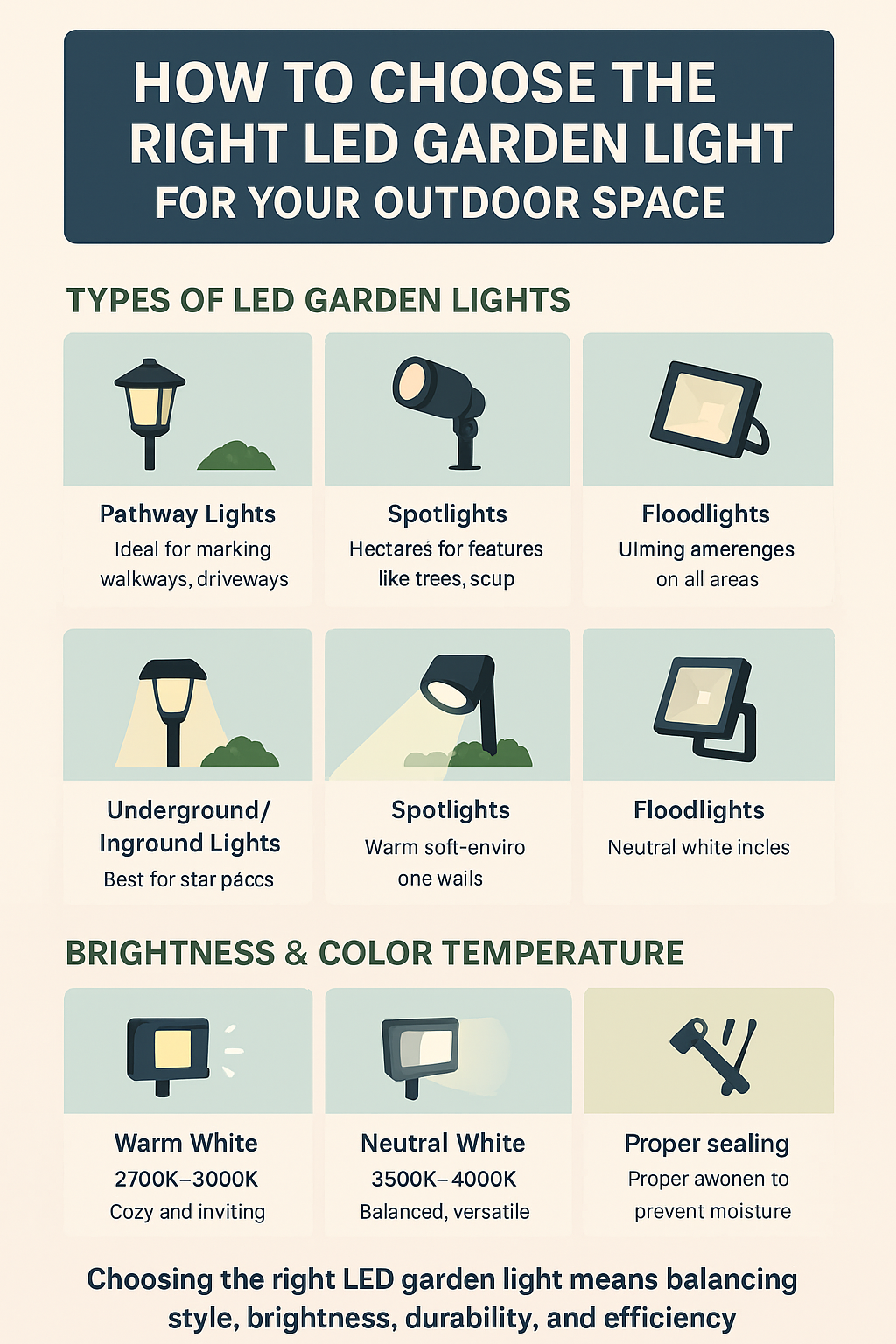
2. Types of LED Garden Lights
To choose the right lighting, you need to understand the different options available.
A. Pathway Lights
Perfect for marking walkways, driveways, and borders.
-
Best for: Safety and subtle illumination.
-
Tip: Choose low-glare designs for a pleasant nighttime experience.
B. Spotlights
Provide focused light to highlight specific garden features such as trees, sculptures, or water fountains.
-
Best for: Accenting focal points.
-
Tip: Look for adjustable beam angles for versatility.
C. Floodlights
Broad-beam lighting for illuminating large garden areas.
-
Best for: Security and bright general lighting.
-
Tip: Consider motion-sensor floodlights for energy efficiency.
D. Underground / Inground Lights
Recessed into the ground for a clean, modern look.
-
Best for: Highlighting driveways, pathways, or walls.
-
Tip: Choose stainless steel and tempered glass for durability.
E. Wall Washers
Create an even, soft glow on garden walls, hedges, or fences.
-
Best for: Ambient background lighting.
-
Tip: Use warm tones for a cozy feel.
F. Decorative Garden Lights
Includes bollard lights, lanterns, and window sill lights that double as artistic elements.
-
Best for: Adding personality and style.
-
Tip: Match the design to your landscape theme.
3. Choosing the Right Brightness & Color Temperature
Brightness is measured in lumens, not watts. For garden lighting:
-
Pathways: 100–300 lumens.
-
Spotlights: 300–700 lumens.
-
Floodlights: 700–2000+ lumens.
Color temperature affects mood:
-
Warm White (2700K–3000K): Cozy and inviting.
-
Neutral White (3500K–4000K): Balanced and versatile.
-
Cool White (5000K–6500K): Crisp, modern look for security and task lighting.
4. Durability and Weather Resistance
Since garden lights are exposed to the elements, durability is key. Look for:
-
IP Rating: At least IP65 for outdoor use, meaning dust-tight and resistant to water jets.
-
Material: Stainless steel for corrosion resistance, tempered glass for impact resistance, and aluminum for lightweight durability.
-
Sealing: Properly sealed fixtures prevent moisture ingress.
5. Energy Efficiency and Power Options
LED garden lights are inherently efficient, but you can optimize further:
-
Low-Voltage (12V) Systems – Safe and energy-saving, ideal for DIY installations.
-
Solar-Powered – Environmentally friendly, though brightness depends on sunlight.
-
Smart Control – Use timers, dimmers, or smart home systems to adjust brightness and schedules.
6. Placement Tips for Maximum Impact
-
Layer Lighting: Combine pathway lights, spotlights, and wall washers for depth.
-
Avoid Glare: Position lights to shine away from eyes.
-
Highlight Natural Elements: Illuminate trees from below for dramatic effect.
-
Balance Light Levels: Don’t over-light; aim for subtle accents.
7. Maintenance Considerations
-
Regularly clean lenses and remove debris.
-
Check seals and gaskets for wear.
-
Replace faulty LED drivers if needed.
-
Use replaceable LED modules for easy servicing.
8. Integrating with Other Outdoor Lighting Products
You can combine LED garden lights with:
-
Outdoor Wall Lights – For vertical lighting around entrances or patios.
-
Underground Lights – For driveways and architectural highlights.
-
Floodlights – For security in larger outdoor areas.
-
Window Sill Lights – For decorative touch near facades.
This creates a cohesive outdoor lighting system that enhances both beauty and functionality.
Conclusion
Choosing the right LED garden light means balancing style, brightness, durability, and efficiency. From stainless steel inground lights to warm pathway lanterns, the right selection can elevate your garden from ordinary to extraordinary — while saving energy and reducing maintenance costs.
If you are looking for garden lights, outdoor wall lights, underground lights, floodlights, wall washers, downlights, spotlights, and track lights for your project, our factory offers high-quality, weatherproof LED lighting solutions designed for both residential and commercial applications.