How to Choose Beam Angles for LED Inground Light (10°, 30°, 60° Guide)
Selecting the correct beam angle is one of the most important factors in outdoor lighting design. Even a high-quality LED inground light can produce poor lighting results if the beam angle is chosen incorrectly.
In landscape and architectural lighting, beam angle directly affects:
- Light distribution
- Brightness concentration
- Visual atmosphere
- Highlighting effect
- Glare control
- Energy efficiency
Whether you are illuminating:
- Trees
- Building facades
- Pathways
- Columns
- Sculptures
- Landscape walls
understanding beam angles helps achieve professional lighting results.
This guide explains how to choose the right beam angle for LED inground lights, focusing on the most common options:
- 10° narrow beam
- 30° medium beam
- 60° wide beam
It also provides practical application recommendations for architects, contractors, distributors, and landscape lighting designers.
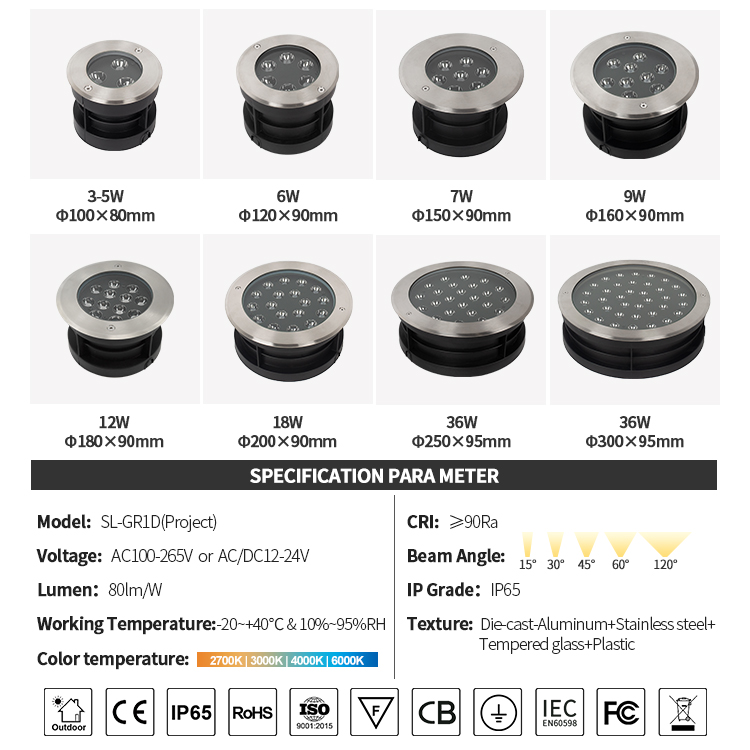
1. What Is Beam Angle in LED Inground Lights?
Beam angle refers to the spread of light emitted from a fixture.
It is measured in degrees and determines:
- How concentrated the light is
- How wide the illuminated area becomes
Simple Rule:
- Smaller beam angle = narrower, more focused light
- Larger beam angle = wider, softer light spread
Beam angle significantly changes the visual effect even when using the same wattage and lumen output.
2. Why Beam Angle Matters in Landscape Lighting
Improper beam selection can cause:
- Uneven lighting
- Excessive glare
- Light pollution
- Weak architectural emphasis
- Wasted energy
Correct beam selection improves:
- Lighting precision
- Visual comfort
- Landscape layering
- Architectural depth
Professional lighting design depends heavily on beam control.
3. Understanding the Three Main Beam Angles
10° Beam Angle
- Ultra narrow beam
- Concentrated spotlight effect
- Long projection distance
30° Beam Angle
- Medium beam spread
- Balanced brightness and coverage
- Most versatile option
60° Beam Angle
- Wide flood distribution
- Soft illumination
- Large coverage area
Each beam angle serves different lighting purposes.
4. 10° Beam Angle: Narrow Spotlight Effect
Characteristics
A 10° beam produces:
- Tight light concentration
- Strong brightness intensity
- Sharp highlight effect
This creates dramatic architectural lighting.
Best Applications for 10° Beam
Tree Trunk Uplighting
Perfect for:
- Tall palm trees
- Feature trees
- Narrow vertical elements
The narrow beam emphasizes height and texture.
Column Lighting
Ideal for:
- Architectural columns
- Pillars
- Facade details
It creates strong vertical emphasis.
Sculpture Accent Lighting
A narrow beam isolates visual focal points while minimizing light spill.
Advantages of 10° Beam
✔ Strong dramatic effect
✔ Long-distance projection
✔ Minimal light spill
✔ Excellent for accent lighting
Limitations of 10° Beam
❌ Small coverage area
❌ Requires precise aiming
❌ Can create harsh contrast if overused
5. 30° Beam Angle: The Most Versatile Choice
Characteristics
A 30° beam provides:
- Balanced spread and intensity
- Controlled illumination
- Versatile application flexibility
This is the most commonly used beam angle in outdoor lighting.
Best Applications for 30° Beam
Medium-Sized Trees
Provides:
- Balanced canopy illumination
- Controlled upward lighting
- Natural visual appearance
Landscape Walls
Suitable for:
- Stone walls
- Retaining walls
- Architectural textures
Creates even wall washing without excessive spill.
Garden Feature Lighting
Ideal for:
- Decorative plants
- Water features
- Landscape sculptures
Advantages of 30° Beam
✔ Versatile performance
✔ Balanced light distribution
✔ Easier installation alignment
✔ Reduced glare risk
Limitations of 30° Beam
❌ Less dramatic than narrow beams
❌ May not cover extremely large surfaces
6. 60° Beam Angle: Wide Flood Lighting
Characteristics
A 60° beam creates:
- Broad light distribution
- Softer illumination
- Lower intensity concentration
This beam is ideal for general landscape coverage.
Best Applications for 60° Beam
Large Building Facades
Provides:
- Smooth wall washing
- Uniform surface illumination
Wide Landscape Areas
Suitable for:
- Lawn lighting
- Garden beds
- Open plazas
Pathway and Public Area Lighting
Wide beams improve:
- General visibility
- Soft ambient lighting
Advantages of 60° Beam
✔ Large coverage area
✔ Softer visual effect
✔ Reduced hotspot intensity
✔ Better for ambient lighting
Limitations of 60° Beam
❌ Less dramatic focus
❌ More light spill
❌ Reduced long-distance projection
7. Beam Angle Comparison Table
| Beam Angle | Light Effect | Best Applications |
|---|---|---|
| 10° | Narrow spotlight | Tall trees, columns, sculptures |
| 30° | Balanced beam | Landscape walls, medium trees |
| 60° | Wide flood | Facades, lawns, open areas |
8. Beam Angle and Installation Distance
The farther the fixture is from the target, the narrower the beam should generally be.
General Rule
| Distance | Recommended Beam |
|---|---|
| Long distance | 10° |
| Medium distance | 30° |
| Short distance / wide area | 60° |
9. Beam Angle and Tree Lighting
Tall Narrow Trees
Use:
- 10°–15° beam
This emphasizes vertical height.
Medium Canopy Trees
Use:
- 24°–36° beam
Provides balanced illumination.
Large Wide Trees
Use:
- 60° beam or multiple fixtures
Ensures canopy coverage.
10. Beam Angle and Architectural Lighting
Narrow Beam
Best for:
- Architectural details
- Columns
- Texture emphasis
Wide Beam
Best for:
- Facade washing
- Large wall surfaces
- Public building illumination
11. Beam Angle and Glare Control
Narrow beams can create:
- Strong hotspots
- Direct glare if improperly aimed
Wide beams reduce concentrated brightness but may increase light spill.
Proper aiming is critical regardless of beam angle.
12. Beam Angle and Energy Efficiency
Correct beam selection improves efficiency because:
- Light reaches intended surfaces
- Less wasted illumination
- Reduced need for higher wattage
Improper beam choice often causes over-lighting.
13. Combining Multiple Beam Angles
Professional projects often combine beam angles for layered effects.
Example:
- 10° for tree trunks
- 30° for shrubs
- 60° for background walls
This creates:
- Visual depth
- Architectural hierarchy
- More natural nighttime landscapes
14. Beam Angle and Fixture Height
Inground fixtures installed close to vertical surfaces often require:
- Narrower beams
Fixtures farther away may use:
- Wider beams
Installation geometry matters.
15. Beam Angle and Lumen Output
Narrow beams appear brighter because:
- Lumens are concentrated in a smaller area.
Wide beams distribute light over larger surfaces.
Therefore:
- A 10° beam can appear much brighter than a 60° beam using the same wattage.
16. Common Beam Angle Mistakes
❌ Using wide beams for tall trees
❌ Using narrow beams for large walls
❌ Ignoring installation distance
❌ Overlapping beams excessively
❌ Choosing based only on wattage
Beam angle is just as important as lumen output.
17. How to Choose the Right Beam Angle
Choose 10° If:
-
You need dramatic spotlighting
- Lighting tall narrow objects
- Minimizing light spill
Choose 30° If:
- You want versatile landscape lighting
- Lighting medium-sized features
- Creating balanced effects
Choose 60° If:
- Lighting large surfaces
- Creating soft ambient lighting
- Covering open landscape areas
18. Professional Design Recommendation
For most landscape projects:
- 30° beam angle is the safest and most versatile choice.
However:
- Premium architectural projects often combine multiple beam angles strategically.
19. Future Trends in Optical Landscape Lighting
Modern LED inground lights increasingly feature:
- Interchangeable optics
- Adjustable beam systems
- Anti-glare optical accessories
- Precision lens technology
This allows greater lighting flexibility and control.
20. Conclusion
Choosing the correct beam angle for LED inground lights is essential for achieving professional outdoor lighting results.
- 10° beams create dramatic accent lighting.
- 30° beams provide balanced and versatile illumination.
- 60° beams deliver wide ambient coverage.
The ideal beam angle depends on:
- Target object size
- Installation distance
- Desired lighting effect
- Architectural purpose
When properly selected, beam angles help create:
- Better visual hierarchy
- Improved energy efficiency
- Reduced glare
- More sophisticated landscape lighting design
In professional outdoor lighting, beam control is just as important as fixture quality itself.