What Is an LED Pool Light? Types, Structure, and Working Principles
LED pool lights have become an essential component of modern swimming pool design, transforming pools from purely functional amenities into visually striking architectural and landscape features. Beyond aesthetics, LED pool lighting plays a critical role in nighttime safety, spatial orientation, and overall outdoor lighting harmony—especially when coordinated with inground lights, recessed ground luminaires, and other landscape lighting fixtures.
As LED technology continues to advance, pool lighting has evolved rapidly in terms of energy efficiency, durability, control options, and optical performance. This article provides a comprehensive overview of what an LED pool light is, the main types available, their internal structure, and the working principles behind their performance. It also explains how LED pool lights integrate with broader outdoor lighting systems, including buried LED ground lights and in-ground landscape fixtures, to create cohesive and professional lighting designs.
1. Understanding LED Pool Lights
1.1 Definition of an LED Pool Light
An LED pool light is a waterproof lighting fixture specifically designed for installation in or around swimming pools, spas, fountains, and other water features. Unlike conventional outdoor luminaires, LED pool lights must operate safely underwater while delivering consistent illumination and resisting corrosion, water pressure, and chemical exposure.
Although pool lights differ structurally from outdoor inground lights, they share similar design philosophies: recessed installation, sealed construction, glare control, and precise light distribution.
1.2 Why LED Technology Dominates Pool Lighting
LEDs have replaced traditional halogen and incandescent pool lights due to their superior performance. Key reasons include:
-
Significantly lower energy consumption
-
Long service life
-
Reduced heat output
-
Enhanced safety
-
Compatibility with RGB and smart control systems
These advantages mirror those driving the widespread adoption of LED inground lighting fixtures in modern landscapes.
2. The Role of LED Pool Lights in Outdoor Lighting Design
Pool lighting is rarely a standalone system. In professional projects, LED pool lights are coordinated with:
-
Inground pathway lights
-
Recessed ground uplights
-
Outdoor wall lights
-
Garden spike lights
-
Hardscape lighting
Together, these elements create layered illumination that enhances usability, safety, and visual appeal throughout the outdoor environment.
3. Main Types of LED Pool Lights
LED pool lights can be classified in several ways based on installation method, structure, and lighting function.
3.1 Surface-Mounted LED Pool Lights
Surface-mounted pool lights are installed on the pool wall surface rather than recessed into a niche.
Key characteristics:
-
Easier installation and replacement
-
Suitable for renovation projects
-
Slim profile designs
These fixtures are often paired with surface-mounted inground lights or low-profile recessed ground luminaires in surrounding areas to maintain visual consistency.
3.2 Recessed (Niche-Mounted) LED Pool Lights
Recessed pool lights are installed inside a niche embedded in the pool wall.
Advantages:
-
Clean, flush appearance
-
Reduced glare
-
Improved durability
This installation approach closely resembles that of ground-embedded LED lights, which are recessed into paving or soil for minimal visual intrusion.
3.3 Flush-Mounted LED Pool Lights
Flush-mounted lights sit level with the pool surface and are commonly used in contemporary designs.
Benefits:
-
Minimal protrusion
-
Modern aesthetic
-
Enhanced swimmer safety
Flush-mounted pool lights visually complement flush inground lights used along pool decks and walkways.
3.4 RGB and Color-Changing LED Pool Lights
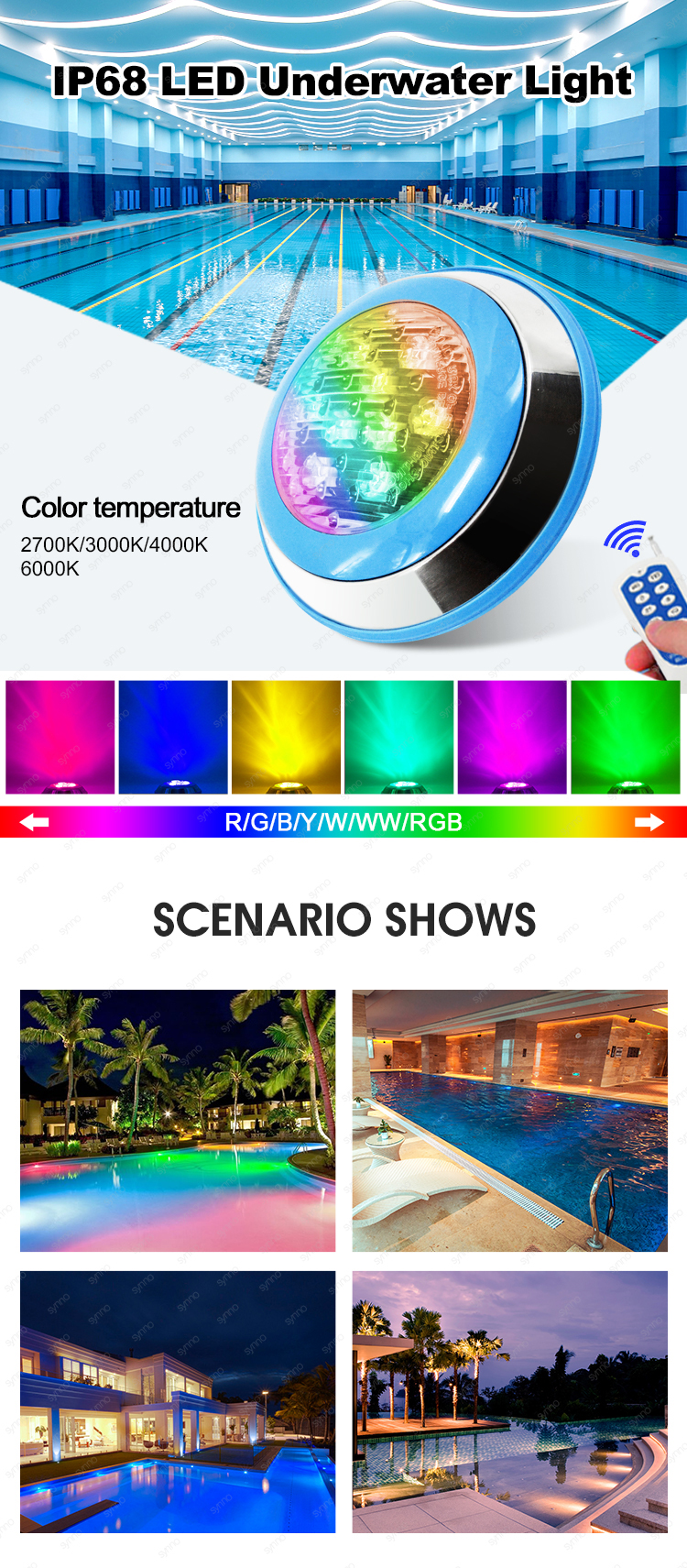
RGB LED pool lights allow users to change colors, create dynamic effects, and synchronize lighting scenes.
Applications include:
-
Residential luxury pools
-
Hotels and resorts
-
Decorative fountains
RGB pool lights are often coordinated with RGB inground uplights and landscape accent lighting for unified color themes.
3.5 White Light LED Pool Lights
White LED pool lights remain the most common choice for functional illumination.
Typical color temperatures:
-
Warm white (2700K–3000K)
-
Neutral white (4000K)
These fixtures pair well with white recessed ground lights for balanced nighttime environments.
4. Structural Components of an LED Pool Light
Understanding the internal structure of an LED pool light helps explain its performance, durability, and safety.
4.1 LED Light Source
The LED chip is the core of the fixture. High-quality pool lights use:
-
High-lumen, low-wattage LEDs
-
Corrosion-resistant substrates
-
Carefully selected color bins
This is similar to premium buried LED ground lights, where LED quality directly affects longevity.
4.2 Optical System
The optical system includes lenses and diffusers that shape the light output.
Functions include:
-
Even light distribution
-
Glare reduction
-
Beam angle control
Optical design principles in pool lights are closely related to those used in in-ground uplights and architectural ground luminaires.
4.3 Housing and Body
Pool light housings are typically made from:
-
Stainless steel
-
High-grade plastic (ABS or PC)
-
Marine-grade aluminum
Materials must resist corrosion from chlorine, saltwater, and constant immersion—conditions even more demanding than those faced by outdoor ground lights.
4.4 Waterproof Sealing System
A critical component of LED pool lights is the sealing system, which includes:
-
O-rings
-
Silicone gaskets
-
Resin-filled cable entries
While inground lights require waterproofing against rain and soil moisture, pool lights must withstand continuous submersion.
4.5 Driver and Power Supply
LED pool lights operate on low voltage (commonly 12V or 24V) for safety.
Drivers may be:
-
External (installed outside the pool)
-
Integrated with the fixture
This low-voltage approach is also standard in in-ground landscape lighting systems.
5. Working Principles of LED Pool Lights
5.1 Electrical Operation
Electricity flows from a low-voltage power supply to the LED driver, which regulates current and voltage to the LED chips.
This controlled operation ensures:
-
Stable brightness
-
Long LED lifespan
-
Minimal heat generation
5.2 Light Emission and Distribution
LEDs emit directional light, which is shaped by lenses and reflectors to evenly illuminate the pool interior. Unlike traditional bulbs, LEDs do not emit light in all directions, improving efficiency.
This principle is shared with recessed ground luminaires, which rely on directional optics for precise illumination.
5.3 Heat Management
Despite being energy-efficient, LEDs generate some heat. Pool lights dissipate heat through:
-
Metal housings
-
Water contact (natural cooling)
Effective thermal management is also essential in buried LED ground lights, where airflow is limited.
5.4 Color Mixing in RGB Pool Lights
RGB pool lights use individual red, green, and blue LEDs. By adjusting current levels, the system creates different colors and lighting effects.
Advanced controllers synchronize RGB pool lights with RGB inground lights and garden lighting.
6. Safety Considerations for LED Pool Lights
6.1 Low-Voltage Operation
Low voltage reduces the risk of electric shock, making LED pool lights safer than older technologies.
6.2 Waterproof and Electrical Standards
High-quality pool lights comply with:
-
IP68 waterproof ratings
-
International safety certifications
These standards exceed those required for most outdoor inground lights, reflecting the increased risk of underwater installations.
7. Installation Methods and Design Considerations
7.1 Placement and Spacing
Proper spacing ensures even illumination without glare or dark zones. Designers often align pool lights with nearby recessed ground lights to maintain visual rhythm.
7.2 Coordination with Pool Shape and Materials
Light color and beam angle should complement pool finishes, tile colors, and surrounding surfaces.
7.3 Integration with Landscape Lighting
LED pool lights should not overpower surrounding lighting. Instead, they should work in harmony with:
-
Inground pathway lights
-
Buried LED uplights
-
Outdoor wall lamps
This integration enhances spatial coherence.
8. Energy Efficiency and Sustainability
LED pool lights consume up to 80% less energy than halogen alternatives. Combined with efficient in-ground lighting, they significantly reduce overall outdoor energy consumption.
9. Smart Control and Automation
Modern LED pool lights often support:
-
Remote controls
-
Smartphone apps
-
DMX or smart home systems
These controls can synchronize pool lights with smart inground lighting systems for unified operation.
10. Maintenance and Longevity
LED pool lights require minimal maintenance due to:
-
Long LED lifespan
-
Sealed construction
-
Corrosion-resistant materials
Their durability often surpasses that of standard ground-embedded luminaires.
11. Applications Beyond Swimming Pools
LED pool lights are also used in:
-
Decorative fountains
-
Water walls
-
Reflecting pools
-
Landscape ponds
In such projects, they are frequently paired with underwater inground lights and perimeter ground fixtures.
12. Common Mistakes to Avoid
-
Using non-submersible fixtures
-
Poor waterproof sealing
-
Incorrect voltage selection
-
Ignoring coordination with inground lighting
Avoiding these mistakes ensures safety and performance.
13. LED Pool Lights vs. Traditional Pool Lights
Compared to halogen lights, LEDs offer:
-
Lower energy consumption
-
Longer lifespan
-
Better color control
-
Reduced maintenance
This transition mirrors the shift from traditional lamps to LED inground lights in landscape lighting.
14. Future Trends in LED Pool Lighting
Emerging trends include:
-
Ultra-thin designs
-
Advanced RGBW color tuning
-
Integration with smart ecosystems
-
Improved optical uniformity
These developments parallel innovations in next-generation ground-embedded lighting.
15. Choosing the Right LED Pool Light
When selecting an LED pool light, consider:
-
Installation type
-
Light output and color
-
Material quality
-
Compatibility with existing in-ground lighting systems
-
Certifications and testing standards
16. Conclusion
An LED pool light is far more than an underwater lamp—it is a sophisticated lighting system designed to deliver safety, efficiency, and visual impact in demanding environments. Through advanced LED technology, robust waterproof construction, and precise optical control, modern pool lights outperform traditional solutions in every meaningful way.
When thoughtfully integrated with inground lights, recessed ground luminaires, and other outdoor lighting elements, LED pool lights become a key part of a cohesive nighttime landscape. Whether for residential pools, luxury resorts, or public water features, understanding the types, structure, and working principles of LED pool lights is essential for achieving professional, durable, and visually compelling lighting designs.