How to Match Bulkhead Lights with Exterior Wall and Ceiling Design (2026)
Quick Overview of Key Points
- Choose bulkhead light shapes that complement architectural styles.
- Match fixture materials with exterior wall finishes for a cohesive appearance.
- Consider ceiling height and mounting location before selecting fixture size.
- Coordinate light color temperature with facade materials and outdoor ambiance.
- Use beam distribution strategically for entrances, corridors, patios, and walkways.
- Select appropriate IP ratings for long-term outdoor durability.
- Balance aesthetics and functionality in residential and commercial projects.
- Integrate modern LED bulkhead wall light into contemporary architectural lighting plans.
1. Introduction
Exterior lighting plays a crucial role in both the appearance and functionality of a building. While many project owners focus on decorative wall sconces or landscape lighting, bulkhead lights remain one of the most practical and versatile solutions for outdoor applications. However, selecting the right fixture is not simply about brightness or waterproof performance. Poorly matched lighting can disrupt the visual harmony of a building and reduce its architectural appeal.
For architects, contractors, distributors, and property developers, understanding how to coordinate bulkhead lights with exterior walls and ceilings is essential. A well-designed lighting scheme enhances safety, improves aesthetics, and creates a cohesive outdoor environment. This guide explores the key principles for matching bulkhead lights with different architectural styles and surface materials in 2026.
2. Why Design Compatibility Matters for Bulkhead Lighting
Summary
- Enhances architectural aesthetics
- Creates visual consistency
- Improves property value and user experience
Bulkhead lights were originally developed as durable utility fixtures for industrial and marine applications. Today, modern LED wall bulkhead lights have evolved into stylish architectural products suitable for residential, commercial, and hospitality projects.
When a fixture complements the surrounding wall and ceiling design, it becomes part of the overall architectural language rather than an isolated functional element. For example, a sleek rectangular fixture can reinforce the clean lines of a contemporary facade, while a traditional round bulkhead may better suit classic or coastal architecture.
Studies in commercial property design suggest that cohesive exterior lighting can improve perceived building quality and contribute positively to visitor impressions. This makes fixture selection an important consideration during project planning.
3. Matching Bulkhead Light Shapes with Architectural Styles
Summary
- Round fixtures suit traditional and coastal designs.
- Square and rectangular fixtures complement modern architecture.
- Slim-profile designs work well in minimalist projects.
The shape of a bulkhead light significantly influences its visual integration with the building exterior.
Modern and Contemporary Buildings
For contemporary architecture, square or rectangular LED bulkhead lights typically provide the best match. These fixtures align with geometric facades, sharp edges, and minimalist design principles commonly found in modern commercial and residential projects.
Examples include:
- Apartment complexes
- Office buildings
- Hotels
- Retail storefronts
Traditional Architecture
Buildings featuring brickwork, decorative moldings, or classical elements often benefit from round or oval bulkhead lights. These shapes create a softer appearance that complements traditional design characteristics.
Examples include:
- Heritage-style residences
- Coastal homes
- Boutique hotels
- Community buildings
Industrial and Urban Designs
Industrial-style architecture can effectively incorporate exposed or robust bulkhead fixtures with visible fasteners and rugged housings. These fixtures reinforce the functional aesthetic of the building.
4. Coordinating Fixture Materials with Exterior Wall Finishes
Summary
- Aluminum works well with modern materials.
- Black finishes create strong visual contrast.
- Neutral finishes blend seamlessly into facades.
Material selection is just as important as fixture shape.
Concrete and Stone Walls
For concrete or natural stone facades, powder-coated aluminum bulkhead lights offer a sophisticated appearance. Dark gray, anthracite, or matte black finishes often create attractive contrast while maintaining architectural consistency.
Brick Facades
Brick surfaces pair well with bronze, graphite, or textured black fixtures. These finishes complement the natural texture and warm tones of masonry materials.
Metal-Clad Buildings
For commercial and industrial projects with metal panels, modern aluminum LED bulkhead lights provide a cohesive look. Matching fixture colors to panel finishes can create a clean and professional appearance.
Wood and Composite Surfaces
Wooden exterior elements benefit from fixtures with warm metallic finishes or minimalist black designs. These combinations balance contemporary aesthetics with natural materials.
5. Choosing the Right Bulkhead Light for Exterior Ceilings
Summary
- Consider ceiling height and available space.
- Use low-profile fixtures for compact areas.
- Ensure uniform illumination across surfaces.
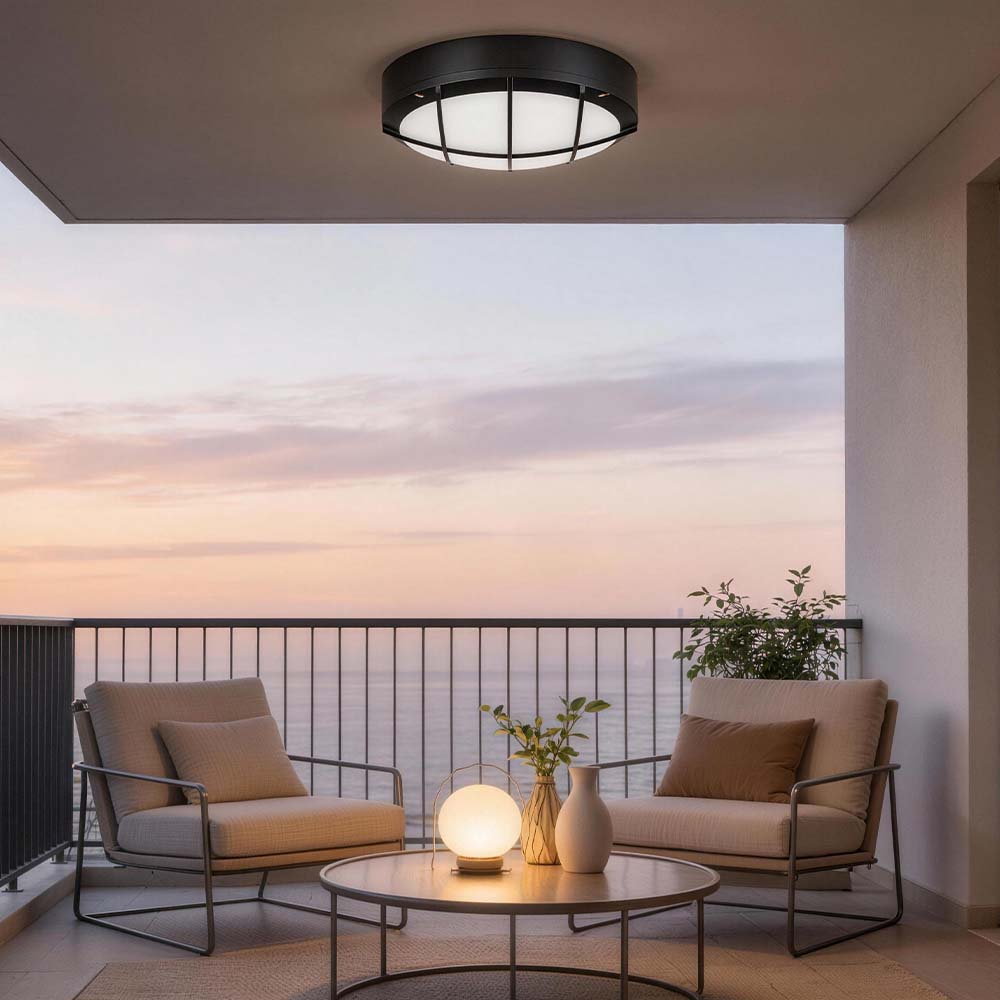
Ceiling-mounted bulkhead lights are commonly installed in covered outdoor spaces such as:
- Entrance canopies
- Walkways
- Parking structures
- Balconies
- Verandas
Low Ceilings
For ceilings below 2.5 meters (8 feet), low-profile LED bulkhead lights help prevent visual clutter and reduce the risk of accidental impact.
High Ceilings
Larger fixtures with higher lumen output may be required for higher ceilings to maintain adequate illumination levels.
Uniform Layout
Spacing is critical when mounting multiple bulkhead lights on ceilings. Consistent fixture placement creates visual order and prevents uneven lighting patterns.
For commercial applications, lighting designers often use photometric calculations to ensure optimal fixture spacing and uniformity.
6. Matching Light Color Temperature with Building Design
Summary
- Warm white enhances residential and hospitality projects.
- Neutral white suits mixed-use spaces.
- Cool white improves visibility in commercial environments.
Color temperature strongly influences how walls, ceilings, and building materials appear at night.
2700K–3000K Warm White
Best suited for:
- Residential properties
- Hotels
- Restaurants
- Outdoor leisure areas
Warm light enhances natural materials such as wood and stone while creating a welcoming atmosphere.
4000K Neutral White
Commonly used for:
- Apartment buildings
- Commercial entrances
- Mixed-use developments
This temperature provides a balanced appearance without appearing too warm or too clinical.
5000K–6500K Cool White
Suitable for:
- Industrial facilities
- Parking structures
- Utility areas
Cool white maximizes visibility but should be used carefully in architectural applications to avoid a harsh appearance.
7. Case Study: Matching Bulkhead Lights for a Residential Apartment Project
Project Name
Modern Apartment Exterior Renovation
Location
Australia
Client Type
Residential Property Developer
Project Background
A developer sought to upgrade the exterior lighting of a mid-rise apartment complex while maintaining a contemporary architectural appearance.
Challenges
- Existing fixtures looked outdated.
- Lighting was inconsistent across walkways and entrances.
- The building featured mixed concrete and aluminum facade materials.
Solution
The design team selected rectangular LED bulkhead lights with matte black aluminum housings. Fixtures were installed on both walls and covered walkways.
Lighting specifications included:
- 4000K neutral white color temperature
- IP65 waterproof protection
- Uniform spacing throughout the property
Results
- Improved nighttime aesthetics
- Better illumination uniformity
- Reduced maintenance requirements
- Enhanced resident satisfaction and property appearance
The project demonstrated how proper coordination between bulkhead lighting and architectural elements can significantly improve overall building presentation.
8. Common Design Mistakes to Avoid
Summary
- Oversized fixtures on small walls
- Mismatched finishes
- Incorrect color temperatures
- Ignoring architectural proportions
Several common mistakes can reduce the effectiveness of bulkhead lighting:
- Selecting fixtures that are too large for the mounting surface.
- Mixing multiple fixture styles on the same facade.
- Using cool white light in hospitality or residential settings.
- Ignoring wall textures and material compatibility.
- Choosing fixtures based solely on lumen output rather than overall design integration.
Avoiding these issues helps maintain a professional and cohesive lighting scheme.
9. Conclusion: Creating a Cohesive Exterior Lighting Design
Successfully matching bulkhead lights with exterior wall and ceiling design requires balancing functionality, aesthetics, and architectural context. Fixture shape, material, finish, color temperature, and mounting location all contribute to the final appearance of a building.
Whether the project involves residential communities, hospitality venues, commercial buildings, or public infrastructure, properly selected LED bulkhead lights can enhance safety while strengthening architectural identity.
At Synno, we design and manufacture professional outdoor lighting solutions that combine durability, energy efficiency, and modern aesthetics. Our LED bulkhead light range is engineered to integrate seamlessly with a wide variety of wall and ceiling designs, helping distributors, contractors, and developers achieve outstanding project results.
Contact Synno today to learn more about our architectural bulkhead lighting solutions for modern exterior applications.